Parkinson's disease research
New clues to Parkinson’s progression from vulnerable brain cells
Published on: 7 October 2026
Researchers have carried out the first single-cell analysis of mitochondrial DNA in a population of brainstem neurons that are particularly vulnerable to degeneration in Parkinson’s disease.
The study, published today in Brain, and involving Newcastle University experts reveals extensive damage to mitochondrial DNA in these neurons and identifies evidence of a potentially protective response involving the mitochondrial quality-control gene PINK1.
This response was particularly pronounced in people who survived longer after their Parkinson’s diagnosis.
The findings could help medical and clinical scientists understand why these neurons are vulnerable in Parkinson’s disease and identify ways to strengthen the brain’s natural mechanisms for protecting them.
Protective response in Parkinson’s neurons
Genetic and biomedical researchers from Newcastle University and the University of Birmingham used advanced single-cell mitochondrial DNA sequencing and computational analysis to study individual neurons from post-mortem brain tissue donated by people with Parkinson’s disease, as well as healthy control tissue.
The neurons produce acetylcholine, a chemical messenger important for functions including sleep, cognition, and movement. Their loss is associated with some of Parkinson’s most disabling and treatment-resistant symptoms, including problems with gait and balance, sleep disturbances, cognitive decline and, in some people, psychosis.
Researchers found extensive large-scale deletions in mitochondrial DNA, particularly within a region known as the ‘major arc’. This region contains many genes essential for producing energy in cells.
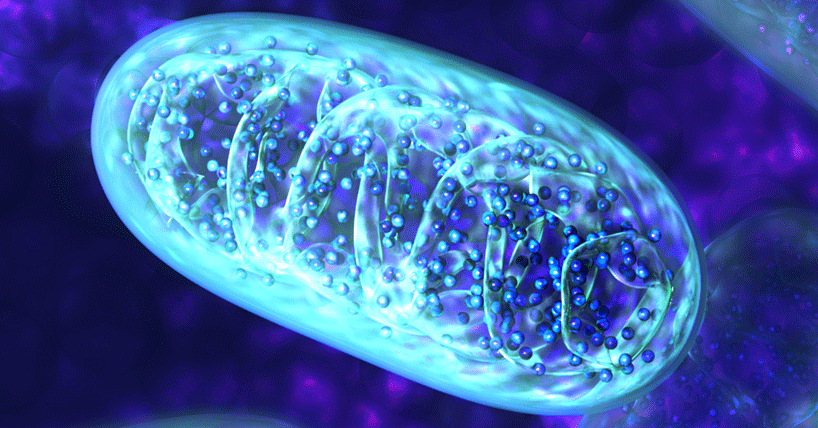
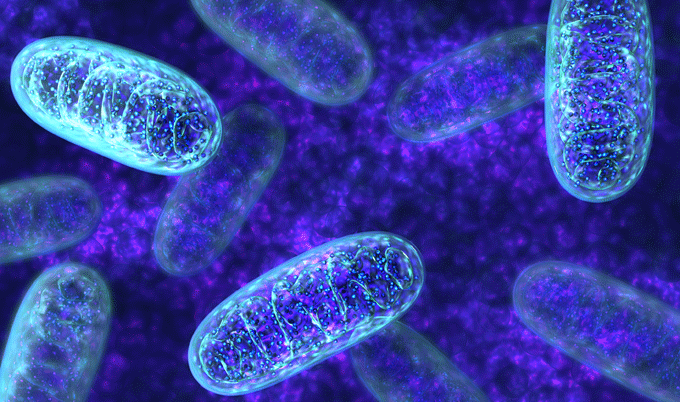
Mitochondria are often described as the cell’s powerhouses. Damage to their DNA can interfere with their ability to produce energy, potentially leaving neurons less able to cope with the demands placed on them.
While much Parkinson’s research has focused on dopamine-producing neurons, which are responsible for many of the condition’s characteristic motor symptoms, this study provides new insight into another group of neurons that contribute to the wider impact of the disease.
Dr Joanna Elson, from Newcastle University and a senior author of the study, said: “Our findings reveal an extraordinary resilience within these vulnerable neurons.
“Although we observed extensive mitochondrial DNA damage, the cells appear to mount a protective response through increased PINK1 expression, likely as an attempt to maintain healthy mitochondria and preserve energy production.
“Understanding why this response appears to be more effective in some individuals than others could open new avenues for therapies aimed at supporting the brain’s own protective mechanisms.”
Despite the extensive mitochondrial DNA damage, the researchers also found evidence that the neurons may be mounting a protective response.
The affected neurons had increased levels of PINK1, a gene involved in mitochondrial quality control. PINK1 helps cells identify damaged mitochondria and target them for removal, helping to maintain healthy mitochondria and energy production.
Importantly, higher levels of PINK1 were particularly evident in neurons from people who had lived longer after their Parkinson’s diagnosis. This could indicate that a stronger mitochondrial quality-control response helps some neurons withstand damage for longer.
Pathways that could slow disease progression
Dr Ilse Pienaar, from the University of Birmingham and a senior author of the study, said: “Our study highlights the importance of other neuronal populations that contribute to many of the disease’s most disabling symptoms.
“This is the first time that single-cell mitochondrial genetic sequencing has been applied to these specific brainstem neurons in people with Parkinson’s disease. Studying individual neurons has allowed us to see, in unprecedented detail, the mitochondrial changes associated with their vulnerability.
“Our findings provide new insights into why these neurons may be particularly vulnerable and point towards biological pathways that could potentially be harnessed therapeutically.
“Strengthening the mechanisms that maintain mitochondrial health could ultimately help slow disease progression and improve quality of life for people living with Parkinson’s.”
The researchers hope the findings will lead to further studies of mitochondrial quality-control pathways as potential therapeutic targets in Parkinson’s disease. Understanding how some neurons withstand damage could ultimately help scientists develop treatments that enhance these natural protective mechanisms.