Neolithic tombs Orkney Caithness
Neolithic tombs reveal ancient kinship ties
Published on: 14 April 2026
Male individuals buried in Neolithic chambered tombs in northern Scotland were often related to each other through the paternal line and some were interred in the same or nearby tombs, research shows.
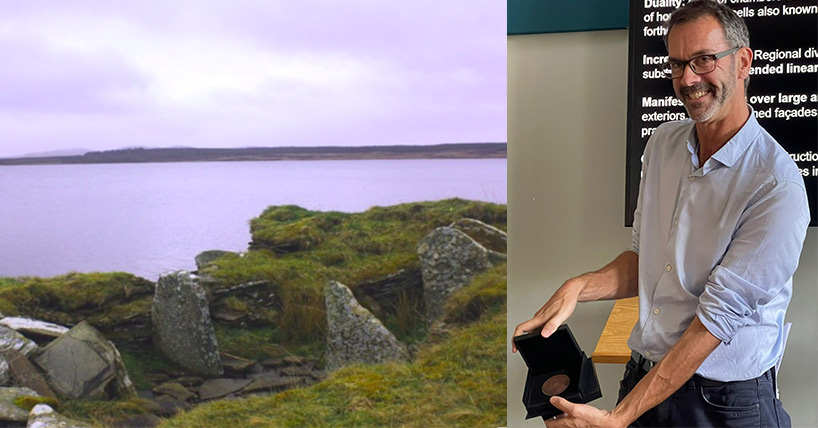
A team of archaeologists including Chris Fowler, Professor of Archaeology, Newcastle University, analysed ancient DNA to investigate the genetic relationships between individuals buried in Neolithic chambered tombs in Caithness and the Orkney Islands, dating from approximately 3800–3200 BCE.
They then compared the results with the structure and layout of the tombs to investigate how funerary architecture visually expressed kinship in the landscapes.
The first Neolithic people in north-west Europe often constructed chambered tombs to inter their remains. Sometimes, these individuals were biologically related to each other, but surviving remains are often fragmented, making connections between tombs and kinship unclear.
Professor Chris Fowler said: “Kinship is a social phenomenon, a measure of social relatedness and belonging which – among many other things - reflects on the biological relatedness of individuals within a community.”
The findings, published in the journal Antiquity, suggest that not only were many individuals close genetic relatives, but that clusters of tombs were also used to trace kinship through architectural similarities and the placement of close relatives.
In this way Neolithic communities built ‘webs of descent’, creating monumental representations of kinship over centuries. “Paternal relatedness was an important part of these webs of descent”, added Professor Fowler.
 GRID.jpg)
“These results are consistent with the interpretation that patrilineal descent was traced in this region,” states lead author Professor Vicki Cummings of Cardiff University. “For the people introducing the Neolithic into Britain, this social connection may have been as important as pots, cows and axes.
“It is incredible to think that, over 5000 years after these people were deposited in these tombs, we are able to reconstruct how they were related to each other through the analysis of ancient DNA. This study shows that the people building these monuments placed a particular emphasis on the male line, and that this was shared across a wide geographic area.”
While specific practices varied between Caithness and Orkney, in both areas shared architecture was constructed for small kin groups and, in the case of two females buried in Orkney, there were even genetic connections across the sea between the mainland and islands.
The team suggest that the construction and use of these tombs was likely a means to trace lines of descent and project them into the future, indicating mortuary practices were a key means through which northern Scottish communities expressed group identities.
Reference: Vicki Cummings, Chris Fowler, Inigo Olalde, Sarah Cuthbert & David Reich ‘Building tombs and entombing the dead as technologies of descent and affinity in Neolithic northern Scotland’, Antiquity, 100 (410). DOI: https://doi.org/10.15184/aqy.2026.10291
Press release adapted from Antiquity, with thanks.