
AMAST antimicrobial use
AMAST network moves from listening to action on farm antimicrobial use
Published on: 9 October 2026
Newcastle University researchers are helping turn the UK’s priorities on antimicrobial resistance in agriculture into practical action.
Experts at Newcastle University are helping lead a major new five-year programme to tackle antimicrobial resistance (AMR) in UK agriculture, working with farmers, veterinarians, industry, researchers and policymakers to turn the sector’s priorities into practical action.
The University’s Dr K. Marie McIntyre and Professor Alex Hughes are co-directors of the AMAST (Antimicrobial Resistance in Agrifood Systems Transdisciplinary) Network, which has secured new investment to develop and test practical approaches to antimicrobial stewardship across UK food production.
AMAST is one of 18 research and innovation projects sharing £54 million from a joint UK government and UK Research and Innovation (UKRI) investment to tackle a range of biosecurity threats, including antimicrobial resistance.
Since the network was established in 2024, more than 250 members from farming, veterinary practice, industry, government and academia have worked together to identify where further progress towards effective antimicrobial stewardship is needed — and what gets in the way.
Led by the Quadram Institute and with Newcastle University at the heart of its leadership, AMAST has deliberately worked with different sectors rather than starting with predetermined research questions. This has helped build shared priorities around animal health, antimicrobial use, diagnostics, data, behaviour and the environment.
Reducing antimicrobial use
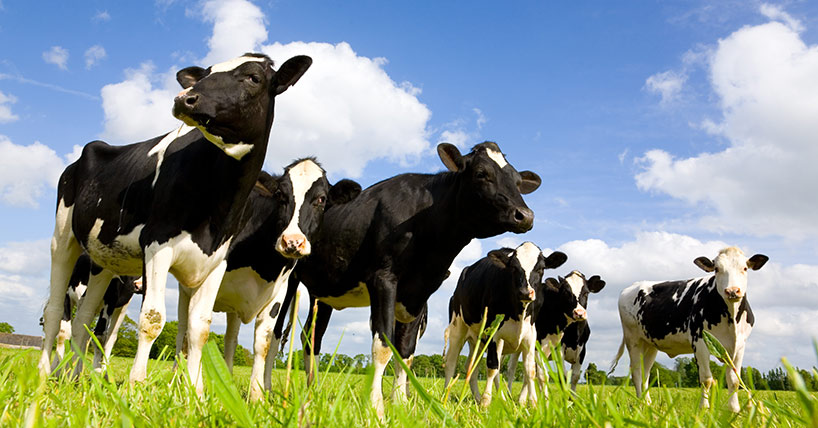
UK agriculture has already made major progress in reducing antimicrobial use while protecting animal health and productivity. The new programme will focus on some of the harder remaining challenges and on turning evidence and sector experience into approaches that can work in everyday practice.
One example is AMAST’s work with the ruminant sector. Working with RCVS Knowledge, the Royal Veterinary College, the British Cattle Veterinary Association (BCVA), and the sheep and cattle antibiotic guardian groups, the network brought farmers, vets and others together to co-develop a practical plan to improve how antibiotic use is recorded, monitored and shared across farms in the UK.
The resulting UK Ruminant Antibiotic Stewardship Roadmap will be launched at the BCVA Congress on 15 October 2026.
AMAST Phase 2, Cultivating mindsets and practices for antimicrobial stewardship in agrifood systems, will concentrate around three connected areas:
- Pigs: working with farmers, veterinarians and advisers on farms facing sustained disease and antimicrobial-use challenges, using swine dysentery as a model to connect better diagnostics, biosecurity, farm management and decision-making.
- Ruminants: putting the UK Ruminant Antibiotic Stewardship Roadmap into practice. Led by the Royal Veterinary College with RCVS Knowledge, Royal Holloway University of London and the Royal Agricultural University, this work will co-design trusted ways to collect and use antimicrobial-use data so farmers and veterinarians can understand their own use, benchmark progress and make informed stewardship decisions.
- Across agrifood: identifying approaches that work across livestock, aquaculture, gamebirds and crops, and bringing international experience into UK stewardship.
Across all three areas, the team will also address environmental aspects of AMR, including antimicrobial residues in manure, soil and water.
It will train the new generation of early-career researchers and set up an international expert panel to share UK learning globally.
AMAST network
AMAST is led by Dr Matthew Gilmour at the Quadram Institute, with co-directors Dr K. Marie McIntyre and Professor Alex Hughes at Newcastle University. The programme brings together researchers from 13 organisations alongside veterinary, farming, industry and government partners.
Dr McIntyre, NU Partnership Academic Track (NUPAcT)/FSA Fellow in Translational Food Safety, Modelling, Evidence and Policy (MEP) group, School of Natural and Environmental Sciences, said: “I’m delighted that we have the opportunity to further our conversations, as trusted partners, with farmers, veterinarians, industry, researchers, regulators, and policymakers.”
“We need to understand the best balance of having healthy animals and good food, but also accepting that we need to use antimicrobials and their alternatives responsibly. This funding enables us to explore the realities of day-today decision-making, helping to identify and communicate practical, evidence-based gains for sustainable stewardship.”
Professor Alex Hughes, Professor of International Business & Management at Newcastle University Business School, said: “Tackling the challenge of antimicrobial resistance through partnership working is vital, and we look forward to working closely with university collaborators and industry partners on this project to improve antimicrobial stewardship in UK agriculture at a critical time.”
Dr Matthew Gilmour added “UK agriculture has already made major progress on antibiotic stewardship. The next gains will not come from simply telling farmers and vets to use less; they will come from solving the real problems that still drive antimicrobial use: disease pressure, availability of alternative medicines, diagnostic uncertainty, data gaps, economics and trust.”
“AMAST brings the people who deal with those challenges every day together with researchers and policymakers to design solutions that work in practice, and creates space for learning to flow across sectors. This investment lets us be part of the One Health approach at the heart of the UK's National Action Plan on AMR, while protecting animal health and keeping antimicrobials effective for the future.”
UKRI Executive Champion for Tackling Infections and BBSRC Executive Chair, Professor Anne Ferguson-Smith, said:
“This investment reflects UKRI's central role in delivering government priorities and our long-standing commitment to convening and working with partners across government to fund vital One Health research into human, animal, and plant health.”
“By pooling expertise from across the research and innovation ecosystem in the UK and globally, we can tackle related infectious disease challenges in a more coordinated way to get ahead of emerging biological threats and help protect people, animals, plants and the environment, both in the UK and internationally. Ultimately, it will advance knowledge, improve lives, and drive growth.”
Adapted with thanks from the AMAST Network.