.jpg)
Materials, Concepts & Reaction Engineering
Our world is facing major technical challenges. We deliver innovative solutions.
We combine expertise in chemistry, materials science, and chemical engineering to find solutions for emerging global technological challenges. We develop new materials and innovative reaction engineering concepts. We design new membranes, chemical looping materials and catalysts.
Our team applies transformative concepts and creative reaction engineering to topics such as:
- carbon dioxide separation
- hydrogen production
- ammonia synthesis
- methane conversion
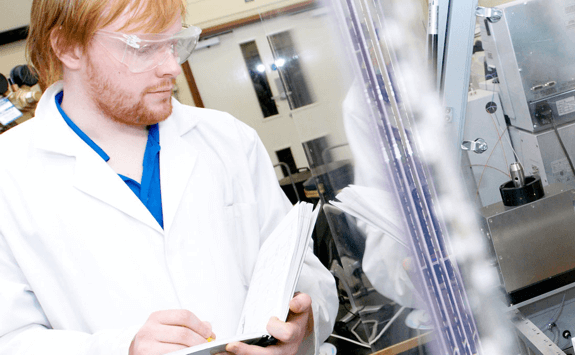
Our research
We are at the cutting-edge of reaction engineering as we aim to cover the full value chain:
- materials
- characterisation
- processes
- modelling
- reactor engineering
This means we can bring fundamental discovery science to projects in the real world.
Reaction engineering
We focus on designing new ion-conducting materials. We develop novel concepts in membrane separations, chemical looping cycles and heterogeneous catalysis.
We use our understanding of materials for new reaction engineering concepts in lab-scale reactors. We explore processes including:
- carbon dioxide capture
- hydrogen production
- ammonia synthesis
- methane conversion
- automotive emissions control
Materials
We study oxygen-ion and electron conducting solids infiltrated with molten salts. This combination of materials allows us to develop new highly-selective gas separation membranes.
We also exploit ion-conducting properties in chemical looping processes. We have been able to devise a new approach to chemical looping, based on the properties of a non-stoichiometric perovskite.
We also study catalysts prepared by exsolution, where a metal is exsolved from a perovskite. Co-electrolysis and catalytic applications use these materials. They have enhanced activity, stability, and coking resistance.
Characterisation
We investigate the structure and stability of supported molten-salt membranes. For example, we use X-ray micro-CT with collaborators to study the development of membrane structure in three dimensions. We also perform wettability measurements. These help us develop self-healing membranes.
We study our chemical looping materials during operation. We have spent significant time at beamlines to carry out detailed in-situ characterisation. We have also used X-ray micro-CT to track the structural evolution of a single chemical looping particle.
For exsolved materials, we use many in-situ characterisation techniques. These include synchrotron X-ray diffraction and environmental transmission electron microscopy (TEM). We apply these characterisation techniques in fundamental studies and for application.
Reactors
We design and operate lab-scale membrane reactors for high-temperature ceramic membranes. We couple these with our significant capabilities for gas analysis, using methods such as mass spectrometry and infrared spectroscopy.
Our integral reactor is a unique lab-scale reactor. It allows us to test new chemical looping materials whilst accessing the bed with diffraction techniques. Coupled with our thermogravimetric analyser (TGA) and pilot-scale looping reactor, we can test these materials over hundreds of cycles.
We also design lab-scale reactors to test catalysts for:
- automotive exhaust catalysis
- chemical looping combined with catalysis
- electrolysis
Research themes
Net zero
Several of our projects are designed specifically to help move us towards a net zero future. These projects have received funding from the Engineering and Physical Sciences Research Council (EPSRC).
We are leading partners in the Centre for Doctoral Training in Process Industries: Net Zero. This centre trains PhD students to give them the skills they need to thrive in a net zero future.
EPSRC have also provided grant funding for a project titled Design, Program, Evolve: Engineering efficient electrochemical devices for a net-zero world.
Impact
Fellowships and funding
As a group we have been awarded a number of research fellowships. These include:
- Royal Academy of Engineering Chair in Emerging Technologies
- Royal Academy of Engineering Research Fellowship
- Newcastle University Academic Track Fellowship
We have an extensive track record of securing funding from EPSRC and ERC, including:
- EPSRC Centre for Doctoral Training in Process Industries: Net Zero
- EPSRC Standard Grant: Design, Program, Evolve: Engineering efficient electrochemical devices for a net-zero world
- EPSRC Programme Grant: Synthesis of high selectivity membranes (SynHiSel)
Reports and outreach
We have co-authored Royal Society policy briefings on several topics, including:
- Large-scale electricity storage
- The potential and limitations of using carbon dioxide
- Options for producing low-carbon hydrogen at scale
We regularly engage with the public. This engagement has included a Royal Society of Chemistry International Year of the Periodic Table lecture and an art exhibition on industrial change.
We provide expert commentary to the global press, including The Guardian and the Science Media Centre.
Professional membership
We contribute to our wider community. We are members or fellows of:
- Royal Academy of Engineering
- Institution of Chemical Engineers
- Royal Society of Chemistry
- Business, Energy, and Industrial Strategy (BEIS) CCUS Early Career Professionals Forum
- UK Carbon Capture & Storage Research Centre
- Newcastle University Centre for Energy
- School of Engineering Athena SWAN Working Group
- Newcastle University INSIGHTS Public Lectures Committee
Funding at Newcastle University
Newcastle University provides funding for postgraduate studies. The School of Engineering has a list of currently available PhD Opportunities open for application. The Faculty of Science, Agriculture and Engineering also runs a wide range of schemes and programmes of Doctoral training. There are many more opportunities on our student finance pages.
NUAcT
The University provides an academic track fellowship scheme. NUAcT is open to both internal and external applicants, from all over the world.
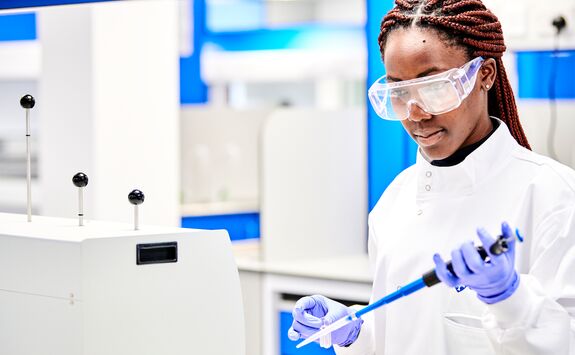
Supporting your application for fellowship
We are always interested in supporting fellowship applications for strong candidates. You can find fellowship funding from external institutions such as:
- EPSRC
- Royal Academy of Engineering
- Royal Commission of 1851
- UKRI
If you want to join us from a non-UK country, a variety of institutions offer funding, such as:
- Newton International Fellowship
- Marie Sklodowska-Curie European Fellowship
- Marshall Scholarships
Collaboration and partnership
Our network includes a number of universities:
- Durham University
- University of Cambridge
- UCL: University College London
- Imperial College London
- University of Manchester
- University of St Andrews
- University of Edinburgh
- University of Bath
- University of Strathclyde
- Twente University
- University of Aveiro
- University of Zaragoza
We also work with: