
Subsurface QI
Quantitative geoscience for infrastructure, energy and environmental projects
Clearer subsurface insight for better project decisions
Understanding what lies beneath the surface is critical to the success of infrastructure, energy and environmental projects. Yet subsurface conditions can be difficult and costly to investigate. This can create uncertainty that affects project design, investment and delivery.
We work with project teams to clarify subsurface conditions, focus investigations and make decisions with greater confidence.
Our service turns complex subsurface data into practical evidence for decision-making by combining:
- passive seismic sensing
- quantitative geophysics
- geological modelling
- uncertainty analysis
From survey design and site characterisation to monitoring, modelling and interpretation, we provide an integrated route from field evidence to decision-ready insight.
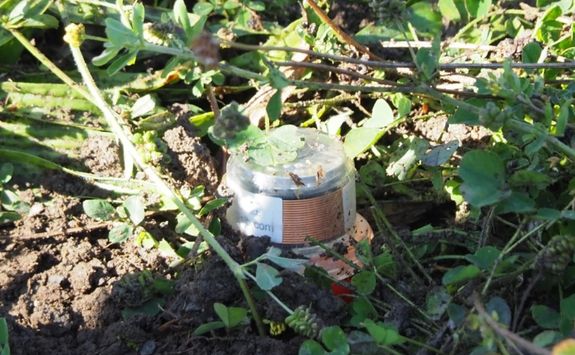
Ambient seismic sensing
Use naturally occurring ground vibrations to characterise and monitor subsurface conditions without active seismic sources.
We use passive seismic methods to characterise and monitor conditions beneath project sites. By recording naturally occurring ground vibrations, we can generate detailed subsurface information without using active seismic sources.
Miniature seismic nodes enable scalable deployments with reduced field logistics and environmental impact.
Efficient processing workflows can produce quantitative subsurface models within days of survey completion.
The result is faster access to practical subsurface evidence for characterisation, monitoring and risk management.
Quantitative subsurface modelling
Integrate geological, geophysical and engineering data into models that explain subsurface conditions, confidence and risk.
Our modelling capabilities include:
- geophysical inversion
- integrated geological and geophysical modelling
- geostatistical analysis and spatial interpolation
- geothermal and mine water resource assessment
- subsurface heat and underground energy storage modelling
- uncertainty quantification and risk analysis
Rather than presenting a single interpretation as certain, our workflows show the confidence associated with model predictions.
This helps your project team to understand risk, compare options and identify where further investigation is most likely to improve decision-making.
Applications
Subsurface QI supports projects across a wide range of sectors, including:
Energy transition
- carbon capture and storage
- geothermal energy
- mine water and subsurface heat
- onshore and offshore wind development
- underground energy storage
Environmental and natural resources
- environmental and groundwater monitoring
- mining and mineral resources
Infrastructure and the built environment
- civil engineering and asset management
- geotechnical and infrastructure engineering
- transport infrastructure
Ways to work with us
We operate a flexible delivery model that can support both routine commercial projects and collaborative innovation.
Defined service packages
Apply validated acquisition, processing and modelling workflows to established site investigation and subsurface characterisation challenges.
Bespoke technical projects
Develop a tailored survey, analysis or modelling approach for a complex site, dataset or decision.
Pilot and feasibility studies
Test technical suitability, demonstrate value and define the evidence needed before wider deployment.
Collaborative innovation
Co-develop new methods and applications through research partnerships, technology validation and knowledge exchange.
Training and professional development
Build organisational understanding of passive seismic methods, quantitative modelling and uncertainty through tailored training or CPD.
Expertise you can trust
Subsurface QI brings together expertise in passive seismic sensing, quantitative geophysics, geological modelling and uncertainty analysis to address real-world infrastructure, energy and environmental challenges.
Meet the team
Dr Mark Ireland
Mark is a Senior Lecturer in Energy Geoscience in the School of Natural and Environmental Sciences. With academic and industry experience, including nine years in technical roles at bp, his work applies geoscience to low-carbon technologies and the decarbonisation of energy systems. He leads the scientific and technical development of Subsurface QI and its application to real-world subsurface challenges.
Dr Sarah Smith
Sarah is an IP and Commercialisation Manager with extensive experience of business-university collaboration. She coordinates the commercial development of Subsurface QI projects, helping partners define their needs, engage with the team and access the right expertise.
Talk to us about your subsurface challenge
Whether you are planning an investigation, evaluating a subsurface opportunity or looking to reduce uncertainty in an existing model, we can help you explore the most appropriate next step.
Email the team at subsurface.qi@newcastle.ac.uk