
Dr Neha Vyas publishes policy brief on Domestic Work, Digital Platforms & Labour Policy in South Africa.
Policymakers set to be given evidence-based recommendations on how to better protect domestic workers and support fairer models of work.
25 June 2026
Fairer alternatives for South Africa's domestic work sector
Lecturer in Commercial Law Dr Neha Vyas has published her policy brief on Domestic Work, Digital Platforms & Labour Policy in South Africa.
The project investigates whether worker-owned digital platforms can offer a fairer alternative to conventional, investor-owned platforms in South Africa's domestic work sector.
The research started in 2023 with support from the Newcastle University Faculty Bid-Prep Fund, followed by ESRC funding.
The project builds on close partnerships with CENTROW (Centre for Transformative Regulation of Work), at the University of the Western Cape and SADSAWU (the South African domestic workers' union).
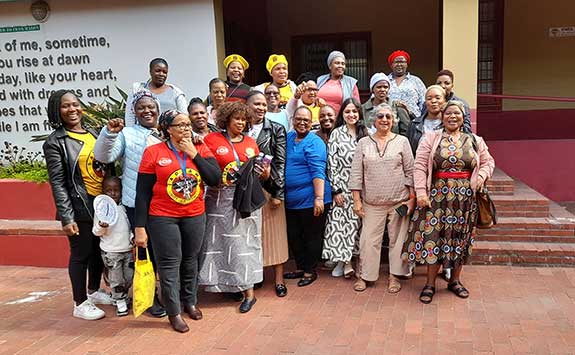
The policy brief is a culmination of 3 years of evidence gathering. Its publication coincides with a timely global development, the adoption of ILO Convention No. 193 on Decent Work in the Platform Economy on 12 June 2026. This was the first international treaty to set binding labour standards for gig and platform workers.
Given that domestic workers are among the most informal and least protected platform workers, this Convention makes the questions at the heart of this research more relevant than ever.
Creating better protection for domestic workers
Domestic workers in South Africa, predominantly Black women, face persistent exploitation, poor working conditions, and significant barriers to accessing even the basic protections they're entitled to.
The digital platforms that have entered the sector have largely reproduced and exacerbated these problems rather than solving them.
Meanwhile, over 300,000 domestic work jobs have been permanently lost since the pandemic, making the search for a sustainable, worker-centred alternative all the more urgent.
The future aims of the project
The policy brief represents a novel approach, placing workers' lived experiences at the centre of legal and policy analysis.
It aims to give policymakers, including the Department of Employment and Labour in South Africa, concrete, evidence-based recommendations to better protect domestic workers and support fairer models of work, digital and otherwise.
Beyond the brief, Dr Vyas continues to build on the partnerships and dialogue established throughout this project, sustaining meaningful engagement with researchers, unions, and workers on the ground to ensure the research translates into lasting, real-world impact.