Electrical Power
Leading the way in electrification, from nanowatts to gigawatts.
We are the UK’s largest academic research group in Electrical Power.
Through our state-of-the-art research laboratory facilities, our activities are highly cross-disciplinary and multi-disciplinary. We work closely with industry to deliver research that is innovative and relevant.
We provide effective solutions in three areas of expertise:
- power electronics, drives and control
- machines
- power systems and energy storage
We carry out pioneering fundamental and applied research. We use world-class facilities at four locations:
- Newcastle University Main Campus
- Newcastle Helix
- Cockle Park Farm in Morpeth
- Newcastle University in Singapore
Our research
Our research vision is to lead the agenda on power-related electrification in the world. This includes electrical transport, smart grids, and hybrid energy storage including batteries and others. We will achieve this through:
- creating a Centre for Electrical Transport
- building on the success of the National Centre for Energy Systems Integration (CESI) by establishing ourselves as the leading research institute in Europe in this area
- leading the Faraday Institute on battery research and other initiatives on electrical power
- spearheading our leading role in the APC spoke for electric motors
- attracting more industrial research centres, building on our existing partnerships with Dyson and Höganäs, and further expanding our links with industry
Power electronics
We focus on the development of:
- highly efficient electric drives
- power dense power converters
- intelligent energy management
- advanced controls of power converters
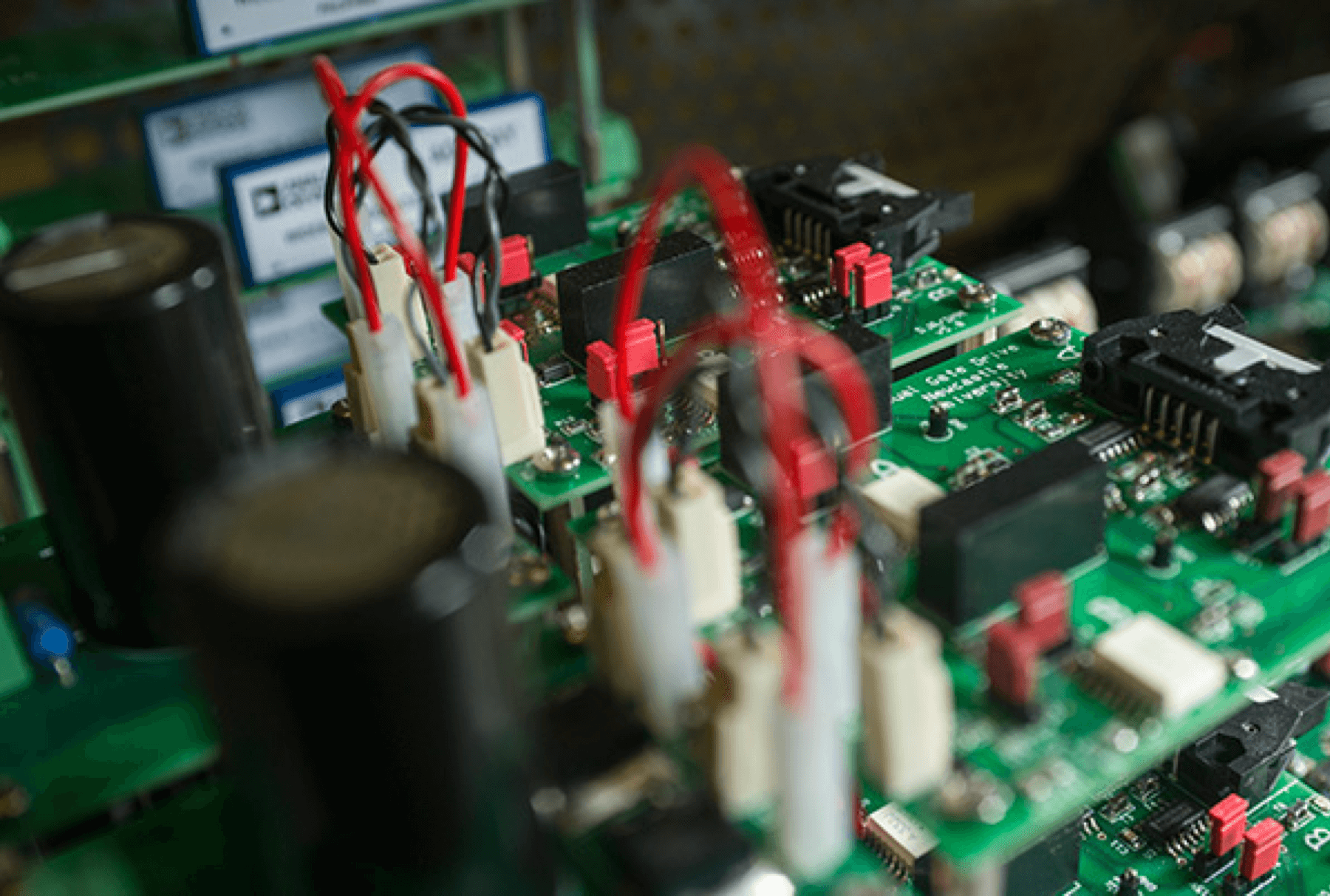
We are also investigating cost-effective silicon carbide and silicon power switching devices. We are using new materials for enhancing cooling power modules.
Our research includes power device fabrication through circuits, drives and control to electrical machines.
Power Electronics research at Newcastle University forms the largest, most balanced set of expertise in the UK. We are unique in the UK in having significant depth across the sector within a single team.
Our research projects cover topics that include:
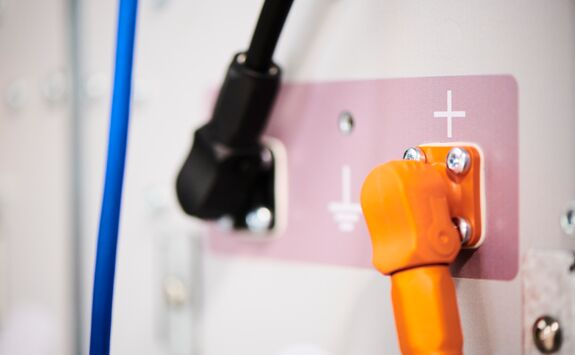
- electric car charging ports
- thermal management
- system modelling
- energy management and control
- electric drives
Drives and control
We specialise in the design and implementation of control algorithms for Power Electronics and Electrical Drives.
The main subsystems of electric drives are:
- the power electronic converter
- the electric machine
- the gearbox
- other ancillary parts such as filters
We have often treated these as separate entities, but integrating the electrical components is becoming increasingly important. We need to consider these subsystems in tandem during the design process.
Machines
We have a long history of pioneering academic and industrially driven research.
We work on the full spectrum of machine topologies. These machines include:
- permanent magnet
- reluctance
- transverse flux
- linear
- high speed
- axial
We have a track record in demonstrating power dense, fault tolerant machines built and tested in house.
We have worked with many industrial partners to drive down the manufacturing cost of motors produced on an industrial scale.
We have worked with large electrical generators. Our research covers coal fired power stations, wind turbines and marine renewable energy.
We are involved across the automotive, product and aerospace sectors.
Our research projects cover machine topics including:
- soft magnetic composites
- power dense
- switched reluctance
- Halbach arrays
EPSRC Future Electrical Machines Manufacturing Hub
The Electrical Power group is a partner in the EPSRC Future Electrical Machines Manufacturing Hub. They combines expertise in electrical machines and manufacturing for the first time.
This £28m investment enables researchers to work with industry on addressing key manufacturing challenges.
Key industrial partners include:
- Höganäs AB
- Dyson
- Rolls Royce
- McLaren
The hub will lead on the design of new electrical machines with improved performance for many sectors including:
- aerospace
- energy
- automotive
- premium consumer
Through world-class research, the hub can help improve industrial productivity and deliver environmental benefits.
Power systems and energy storage
Our innovative research has international impact. We work with academics, industry and policy makers at local, national and international levels.
We deliver solutions in almost every aspect of energy systems integration. We have expertise in areas from storage to distribution, from transmission to end use.
Facilities
Our Smart Grid Lab and Energy Storage Test Bed are unique grid connected facilities at our Newcastle Helix site. They enable investigation of future energy systems.
Smart Grid Lab
Our Smart Grid Lab focuses on the simulation of distribution networks under future scenarios.
An integral part of this system is a real-time network simulator (RTNS). This allows for detailed real-time simulation of networks using sophisticated models. The models can interact with the physical laboratory environment.
Benefits of the Smart Grid Lab include:
- full integration with the low voltage network
- autonomous operation
- emulation
- real-time network simulation models
- fully instrumented
- smart loads and other smart home appliances
- smart grid control systems
- flexible low voltage grid
Mathematical methods for energy systems design, planning and operation
Our research is socio-technical. We use mathematical methods to evaluate a series of network management techniques. Our investigations take place in the presence of emerging low carbon technologies, such as:
- electric vehicles
- heat pumps
- solar photovoltaic generation
We work with domestic and commercial consumers at many levels of the distribution network.
Modelling and demonstration of sub-system performance and control
Our projects in this area use models and demonstrators to investigate energy usage patterns in response to supply and demand. This ensures that the grid is not overloaded as well as giving customers value for money.
Holistic approaches to multi-energy system analysis
We are investigating the integration of multiple energy vectors at local, regional and national scale. We are examining the value of a whole energy systems approach. A whole systems approach takes into consideration:
- heat
- electricity
- gas
- storage
- transport
- demand and supply technologies
We also investigate system-wide issues. These include complementarity, losses, storage, speed, congestion and carbon.
Research themes
Sustainable and resilient development
Our Centre for Doctoral Training in Sustainable Electric Propulsion is leading the transformation from fossil fuel transport to sustainable and environmentally friendly electric transport.
We aim to train students on developing new electrical modes of propulsion. We are partnering with the University of Nottingham on this initiative.
Impact
National Centres
We are creating a Centre for Electrical Transport, placing ourselves at the heart of the Stephenson Centre.
We are leading the Faraday Institution on battery research and other initiatives on electrical power.
APC Electric Machines Spoke
The Advanced Propulsion Centre UK (APC) aims to position the UK as a centre of excellence for low carbon propulsion development and production. The APC team brings together and supports those who have good ideas in the form of innovative technologies with those who can bring them to market as products.
As the Electric Machines Spoke, we act as the focal point for electric machines development in the automotive sector. We are bringing together the academic and industrial communities to set the agenda for future collaborative research.
ATI/Aerospace
Hybrid electric aircraft offer major improvements to performance. They provide significant reductions in CO2, NOx and noise.
Although the group's initial focus is within Electrical Power, our work branches into other fields. These include:
- physics
- mechanical
- engineering
- fluid dynamics
- computing
National Centre for Energy System Integration
The £20m EPSRC National Centre for Energy Systems Integration (CESI) is primarily funded by the Engineering and Physical Sciences Research Council (EPSRC) and Siemens. The balance of funding comes from industry and academic partners.
The Centre brings together energy experts from around the world to help unravel the energy network and understand future supply and demand.
Power Electronics
Funded by the UK Research Council, this project has a total value of £23m. There are four themes:
- integrated drives: led by Newcastle
- use of fast switching devices
- increased reliability
- high temperature operation
Read more on Power Electronics
Centre for Doctoral Training in Sustainable Electric Propulsion
The Centre for Doctoral Training (CDT) in Sustainable Electric Propulsion is a collaboration between two of the UK's largest and most forward-thinking research groups in electric propulsion:
- the Electrical Power Research Group at Newcastle University
- the Power Electronics, Machines and Control Group at University of Nottingham
The CDT will train a new generation of power electronics and electric drives specialists and leaders. This will help to meet the future demands of society and industry for clean, electric propulsion systems.
Over 30 industrial and network partners support both groups. They deliver unprecedented high-quality research and comprehensive training.
Key industries
We are attracting more industrial research centres within the Group. We are building on our existing partnerships with Dyson and Höganäs. We are further expanding our links with industry, locally, nationally and internationally.
Automotive
We are heavily involved in the Advanced Propulsion Centre. We hold a number of innovate_UK projects. Batteries, drives, traction motors and accessory motors are just some of the areas in which we have a proven track record.
Aerospace
Aerospace relies increasingly on electrical, rather than purely mechanical systems. These systems should also deliver improved performance.
We are working with companies such as Rolls Royce and Safran power. We are looking at generators and actuators for applications throughout an aircraft. Applications are both safety and non-safety critical.
We have strong track record in fault tolerant design. We are involved in pioneering solar plane projects. We also hold a strategic role within the Aerospace Technology Institute.
Teaching
Taught programmes
Our Electrical and Electronic Engineering undergraduate programmes give students a path to become a professional engineer addressing major global challenges.
Programmes include:
- Electrical and Electronic Engineering BEng Honours
- Electrical and Electronic Engineering with Industrial Project MEng Honours
- Electronics and Computer Engineering BEng Honours
- Electronics and Computer Engineering with Industrial Project MEng Honours
Our Electrical and Electronic Engineering postgraduate taught (MSc) programmes equip students with the advanced skills and expertise to help shape the world.
Programmes include: