Parthav Mistry
Conservation Graduate
Parthav's career journey
I graduated from SNES in September 2021. Within a week of graduation, I managed to land my first job, thanks to a specific course module called Geographic Information Systems (GIS) and remote sensing. I was employed as a GIS technician. Prior to the MSc, I had little to no experience of GIS and ironically the module on GIS wasn’t one of my favourites either! Though now I can confidentially say that learning GIS has proven to be useful in almost all of my job roles so far.
Following which I got a job at The Oxfordshire Wildlife Trust, followed by The Lincolnshire Wildlife Trusts and then lastly the United Nations Environment Programme – World Conservation Monitoring Centre (UNEP-WCMC) until I moved back to my home country - India.
One of the key elements of my career journey so far is the diversity of the job roles. I have had the opportunity to work in various areas of conservation. Some of these include, ecological surveys, business and biodiversity, biodiversity data and tools like GIS, local level planning policy planning and international conventions and treaties.
Newcastle University presented with a very important breakthrough and a gateway into my new career. The course pretty much built the backbone of my conservation career.
Career milestones
During some volunteering projects I had the chance to visit the David Attenborough Building (DAB). The DAB hosts the CCI (Cambridge Conservation Initiative) which is a collaborative partnership and network of 10 of the largest conservation organisations in the world brought together by the University of Cambridge. I found this place to be quite special and I dreamt of getting a job in a building named after one of my conservation idols – Sir David Attenborough. Little did I know that my next job, with the UNEP-WCMC, which is one of the organisations under the CCI is going to bring me here.
Another key achievement I would like to highlight surfaced during my spell with UNEP-WCMC. While working with IBAT (Integrated Biodiversity Assessment Tool), I was part of the team whose efforts resulted in investing $1.2 million dollars back into the biodiversity datasets. A record since IBAT’s inception.
My dissertation topic provided me a direction which I lacked previously. It felt like I had found my true calling within the sphere of conservation.
A buffet of conservation topics
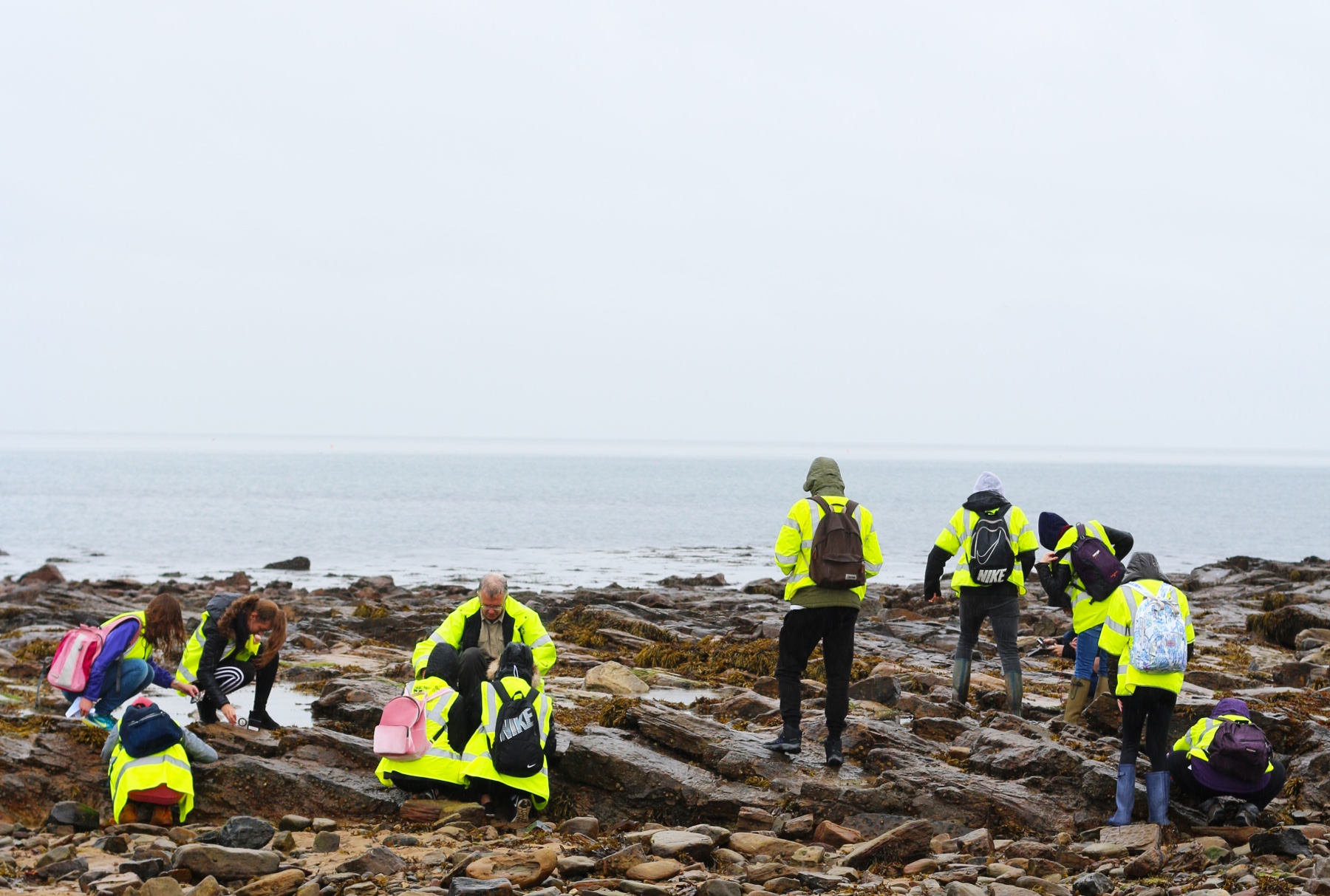
I found that the course was designed to cover a bit of everything – Field study techniques, quantitative analysis (use of R), GIS & remote sensing, designing species action plans, Invasive Alien Species, understanding government policies and, wildlife diseases and epidemiology. Skills and knowledge gained from each of these modules helped me in developing a good understanding of the field of conservation as a whole.
The course is designed in a way that presents students with a buffet of conservation topics to learn and decide which one they want to pursue further going forward. Stepping in to the real world I realised that this is highly imperative because to maximise the impact of conservation, the understanding of various aspects or topics can be synergetic.