Engineering with Foundation Year BEng Honours
2026 entry information
- Study mode and duration
- Full time: 4 years
- UCAS code
- H101
- UCAS institution name and code
- NEWC / N21
- Tuition fees (Year 1)
-
FT Home: £9,790
FT International: £30,700 Scholarships available - Typical entry requirements
-
A-Level: ABB
IB: 32 points
View alternative offers - Course delivery
- On Campus
Clearing - How to apply
What is Clearing?
Each year, universities may have spaces left on their courses after the application window has closed in June.
UCAS Clearing is your opportunity to snap up one of these places, even if you didn't apply to the university prior to the June deadline.
It also gives you a second chance to go to university if you didn't get the grades you needed for your firm and insurance offers.
Sign up for Clearing Alerts
Stay in the know with our Clearing Alerts which provide you with an essential guide as well as advice and guidance on how you can secure a place at Newcastle through Clearing.
We’ll share tips from students, help you prepare, and take you step-by-step through what to do when you receive your results.
How do I get in touch?
Our Clearing entry requirements may differ from those advertised – contacting our friendly advisers is the best way to find out if you’re eligible for a place.
- If you’re an International student and you’ve received your results, apply online from 2 July.
- Received your IB results? Call our International Baccalaureate Hotline on 0191 222 5106. The hotline is open from Monday 6 July – Friday 10 July between 10:00-12:00 and 14:00-16:00.
- Received your SQA results? Speak to or email our advisers on Tuesday 4 August: email ug-admissions@ncl.ac.uk or call 0191 208 3333 between 10:00-16:00
- Our main hotline and live chat open on 13 August at 08:00. Opening times vary after this.
Course overview
This foundation year will help you build the base knowledge you need to progress to any of our engineering BEng degrees.
Develop your knowledge and practical skills with our accredited engineering degrees. You'll focus on a range of topics across the discipline.
You'll also complete a project and laboratory work related to your engineering degree.
This is a full-time programme. It covers core engineering topics, including:
- foundation mathematics
- applied mechanics
- material science
- programming
If you finish the Foundation Year, you're guaranteed a place in one of these BEng courses:
- Chemical Engineering BEng Honours (H810)
- Civil and Structural Engineering BEng Honours (H210)
- Civil Engineering BEng Honours (H200)
- Electrical and Electronic Engineering BEng Honours (H607)
- Electronics and Computer Engineering (H652)
- Naval Architecture and Marine Engineering BEng Honours (H515)
- Mechanical Engineering BEng Honours (H300)
- Aerospace Engineering BEng Honours (H400)
Quality and ranking
Professional accreditation and recognition
Professional accreditations are reviewed regularly by professional bodies to ensure they meet the latest industry practices and regulatory standards. This keeps your degree rigorous, relevant, and highly valued by employers, providing a clear pathway into your chosen career.
If you are studying an accredited degree and considering a career in Europe after graduation, it is important to stay informed about international standards. The best resource for current information is the UK Government's guidance on recognition of UK professional qualifications in EU member states.
This official resource provides essential details on:
- whether your profession is regulated in another country.
- the specific steps you need to take to practice abroad.
- which organisations you should contact to begin the process.
Our students


John from India
Geospatial Surveying and Mapping BEng
My course focuses on land and marine surveying applications. What sets the University apart in this area are the dedicated labs.


Ela from Türkiye
BEng Mechanical Engineering
Newcastle University stood out for its welcoming atmosphere, with hundreds of clubs and societies, and its excellent graduate employability record.


Katie from United Kingdom
Civil and Structural Engineering BEng
The structure of the course has allowed me to mix with engineers from other disciplines and the facilities at the university are excellent.


Edna from Uganda
Chemical Engineering BEng
This course is shaping me into a well-rounded engineer, ready to make an impact in multiple industries.

Max from United Kingdom
Naval Architecture and Marine Engineering MEng
The course is very versatile - you develop knowledge that can be applied across lots of different disciplines and the career aspects are great too.


Orian from Hong Kong
Mechanical Engineering BEng
My engineering degree at Newcastle is a good balance of solid theory and practical application.

Ethan from United Kingdom
Civil Engineering MEng
I’ve done summer placements where I gained hands-on experience in engineering surveying and participated in community outreach for social value.
Modules and learning
Modules
The information below is intended to provide an example of what you will study.
Most degrees are divided into stages. Each stage lasts for one academic year, and you'll complete modules totalling 120 credits by the end of each stage.
Full details of the modules on offer will be published through the Programme Regulations and Specifications ahead of each academic year. This usually happens in May.
Our teaching is informed by research. Course content may change periodically to reflect developments in the discipline, the requirements of external bodies and partners, and student feedback.
Develop your knowledge and practical skills with our accredited engineering degrees. You'll focus on a range of topics across the discipline.
Once you complete our Engineering with Foundation Year course, you can start one of our three-year engineering degrees.
During your Foundation Year, you'll take modules in:
- mathematics
- mechanical sciences
- applied mechanics
The rest of your modules cover a range of engineering and science topics.
You'll also complete a project and laboratory work related to your engineering degree.
Compulsory modules
You take the following compulsory modules:
- Group Project (10 credits)
- Core Mathematics (30 credits)
- Introduction to Computing (10 credits)
- Core Mathematics B (30 credits)
- Concepts in Thermal and Quantum Physics (10 credits)
Electrical Engineering specialism
You take the following compulsory modules:
- Materials Science (10 credits)
- Electricity and Magnetism (10 credits)
- Mechanics (10 credits)
Chemical Engineering specialism
You take the following compulsory modules:
- Statistics (10 credits)
- Applications of Chemistry (10 credits)
- Materials Science (10 credits)
Civil Engineering or Marine Engineering specialism
You take the following compulsory modules:
- Statistics (10 credits)
- Materials Science (10 credits)
- Mechanics (10 credits)
We base these figures and graphs on the most up-to-date information available to us. They are based on the modules chosen by our students in 2025-26.
Teaching time is made up of:
- scheduled learning and teaching activities. These are timetabled activities with a member of staff present.
- structured guided learning. These are activities developed by staff to support engagement with module learning. Students or groups of students undertake these activities without direct staff participation or supervision
Teaching and assessment
Teaching methods
You'll learn from staff across our School of Engineering and other science departments. You'll also learn through a combination of:
- taught lectures
- tutorials
- practical work
- laboratory reports
Assessment methods
You'll be assessed through a combination of:
-

Assessments
-

Group work
-

Reports
-

Seminar tasks/exercises
Skills and experience
Practical Skills
We'll equip you with real-world, practical experience so you're ready for both your studies and a future career in engineering.
Research Skills
You'll be taught by our world-class researchers. Their cutting-edge research will be at the forefront of your learning.
You'll also engage in research and projects that focus on the latest industry developments, building valuable skills for both your studies and future career.
Support
You'll be supported by a personal tutor (an academic member of staff) throughout your degree. They can help you with academic and personal issues.
You'll also have access to a peer mentor (a fellow student) in your first year. They can help you settle in and answer any questions you have.
You may be interested in
Entry requirements
All candidates are considered on an individual basis and we accept a broad range of qualifications.
The entrance requirements and offers below apply to 2026 entry.
| A-Level | |
|---|---|
| International Baccalaureate | |
|---|---|
Other UK and the Republic of Ireland qualifications
Alternative offers at Newcastle
Through one of our contextual or alternative offer routes, you could receive an offer of up to three grades lower than the typical requirements.
Contextual offers
We use certain contextual data from your UCAS form, alongside your application, to consider challenges that you may have faced in your education and the potential effect this may have had on your qualifications. This means you may be eligible to receive a lower contextual offer.
PARTNERS offers
One of the largest and longest support entry routes to university of its kind for students from underrepresented backgrounds. We support applicants from application through to study.
Realising Opportunities offers
A unique programme delivered in collaboration with 10 leading, research-intensive universities in the UK. The programme is open to students in Year 12/first year of college.
Pathways to Newcastle offers
Pathways to Newcastle, our national skills entry route, is available for specific subject areas.
High Performance Athletes
We support promising athletes at the application stage, who compete in regional, national or international levels in their sport.
Qualifications from outside the UK
English Language requirements
International Pathway and English Language courses
International Pathway courses are specialist programmes designed for international students who want to study in the UK. We provide a range of study options for international students in partnership with INTO.
These courses are specifically designed for international students who want to study in the UK and progress onto one of our undergraduate degrees. Our International Study Centre, has a range of study options including:
- International Foundation
- International Year One
- English Language courses
Find out more about International Pathway courses
Admissions policy
This policy applies to all undergraduate and postgraduate admissions at Newcastle University. It is intended to provide information about our admissions policies and procedures to applicants and potential applicants, to their advisors and family members, and to staff of the University.
University Admissions Policy and related policies and procedures
Credit transfer and Recognition of Prior Learning
Recognition of Prior Learning (RPL) can allow you to convert existing relevant university-level knowledge, skills and experience into credits towards a qualification. Find out more about the RPL policy which may apply to this course.
Your future
Engineering is a broad field with many different specialisms.
No matter your specialism, you'll emerge as an in-demand graduate with great career prospects.
From global careers in the oil, gas and energy, pharmaceutical, or consumer products sectors through to marine engineering and offshore engineering.
Graduates from our BEng Engineering courses have secured a range of roles at leading companies, including:
- design engineer at BAE Systems
- graduate engineer at Nissan
- lab support worker at NHS
- graduate ground engineer at AECOM
- hydraulic engineer at Water Environment Ltd
- civil engineer at JN Bentley
- graduate electrical project engineer at Powersystems UK
- software engineer at Accenture
- design engineer at Mott MacDonald
- graduate mechanical engineer at Rolls Royce
- graduate track engineer at Network Rail
- graduate naval architect at BAE Systems
- graduate marine design engineer at Expleo
Industry links
With our strong industry connections and focus on practical skills, you'll graduate fully prepared for a career in engineering.
Careers support
Our Careers Service is one of the largest and best in the country, and we have strong links with employers. We provide an extensive range of opportunities to all students through our ncl+ initiative.
Facilities and environment
Facilities
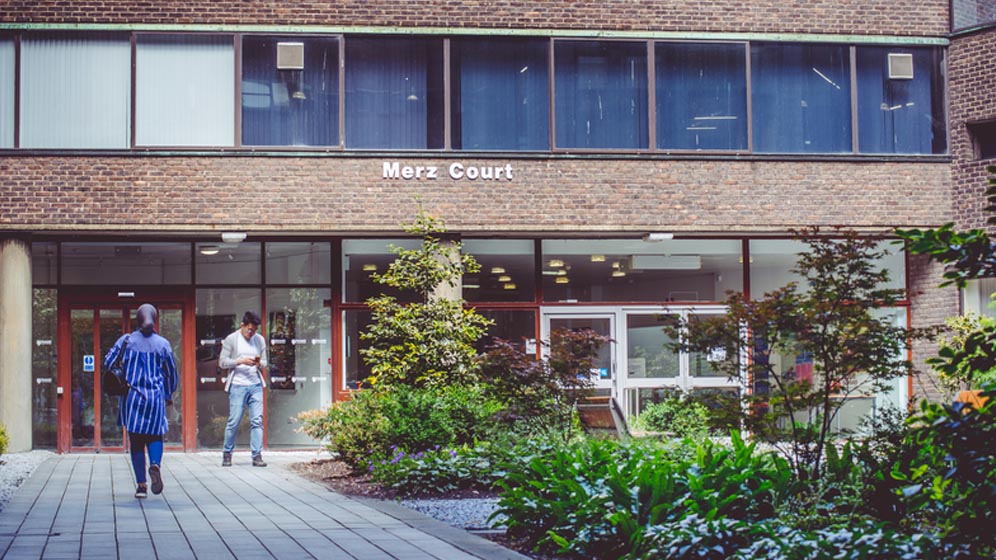
Our Engineering courses are taught at our city-centre campus, within the School of Engineering based in Merz Court.
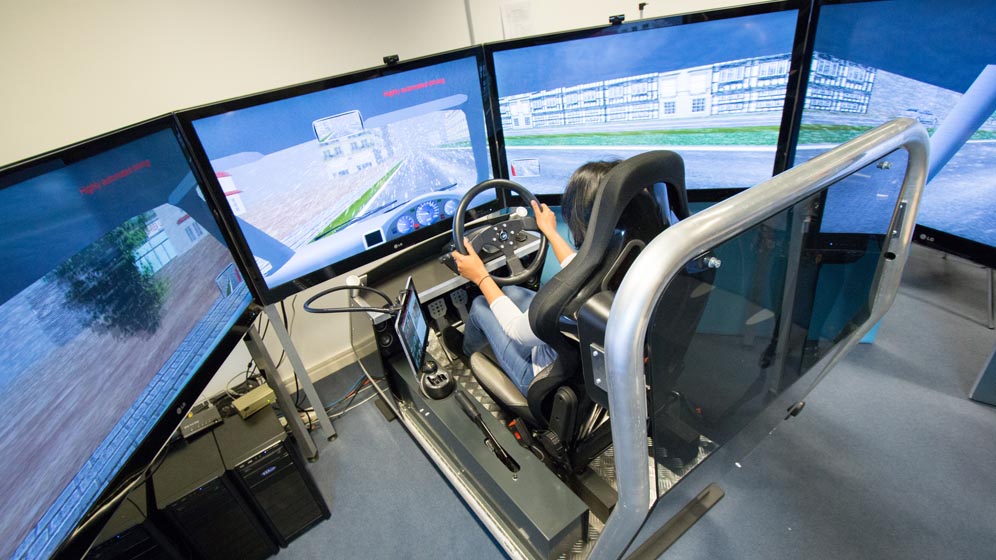
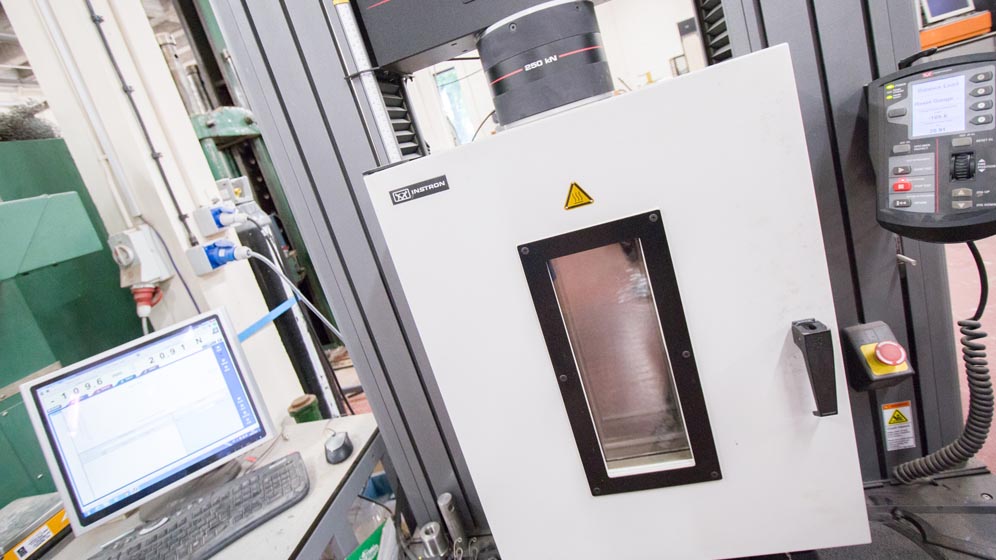
You'll benefit from world-class facilities and living labs, ranging from microbiology laboratories through to at-scale engineering equipment.
Each engineering discipline has its own specialist facilities, including:
- the Millennium Laboratory – home to a wide range of facilities and experimental rigs
- Merz Court Pilot Plant Laboratory – a pilot plant with 28 experimental rigs
- BE:WISE – Europe's largest wastewater treatment research facility
- the Urban Observatory – with sensors gathering over 50 types of data across the city
- Electronics Teaching Lab – home to state-of-the-art Agilent/Keysight digital test equipment
- Clean-Room Microfabrication Lab – home to two class 100-10000 clean rooms



.jpg)
.jpg)

Tuition fees and scholarships
Tuition fees for academic year 2026-2027
| Qualification: BEng Honours | |
|---|---|
|
Home students full time 4 years |
Tuition fees (Year 1)
£9,790 |
|
International students full time 4 years |
Tuition fees (Year 1)
30,700 |
Year abroad and additional costs
For programmes where you can spend a year on a work placement or studying abroad, you will receive a significant fee reduction for that year.
Some of our degrees involve additional costs which are not covered by your tuition fees.
Scholarships
Find out more about:
How to apply
Apply through UCAS
To apply for undergraduate study at Newcastle University, you must use the online application system managed by the Universities and Colleges Admissions Service (UCAS). All UK schools and colleges, and a small number of EU and international establishments, are registered with UCAS. You will need:
- the UCAS name and institution codes for Newcastle University (NEWC/N21)
- the UCAS code for the course you want to apply for
- the UCAS 'buzzword' for your school or college
If you are applying independently, or are applying from a school or college which is not registered to manage applications, you will still use the Apply system. You will not need a buzzword.
Apply through UCASInternational students can apply through an agent
International students often apply to us through an agent. Have a look at our recommended agents and get in touch with them.
Open days and events
UK open days
You'll have a number of opportunities to meet us throughout the year at our on-campus and virtual open days.
You'll be able to:
- explore our beautiful campus
- find out about our vibrant city
- discover what students think about studying at Newcastle
You'll also have the opportunity to speak to academic staff and find out more about the subjects you're interested in.
Find out about how you can visit Newcastle in person and virtually.
Worldwide events
We regularly travel overseas to meet with students interested in studying at Newcastle University. Visit our events calendar to find out when we're visiting your region.
Online events
Get in touch
By phone
Call us on +44 (0) 191 208 3333 and press option 1. Our opening hours are Monday to Friday 10am until 4pm.
Online
Chat to our students
Choosing a university is a big decision. If you've got questions about a particular course, student life or the city of Newcastle, why not chat to our friendly students or graduates!
Keep updated
We regularly send email updates and extra information about the University.
Receive regular updates by email