Human-Centred Artificial Intelligence MSc
- Study mode and duration
- Course code
- 5450F
- Fees (per year)
- Typical entry requirements
-
View full entry requirements - Course delivery
- On Campus
Course information for entry year:
Overview
Human-Centred Artificial Intelligence (HCAI) is a forward-thinking approach that puts people first in the design and use of AI.
This course will equip you with the skills to design, implement, and evaluate AIs. You will ensure that AIs are responsible and aligned with human values - while still delivering strong predictive performance. You'll learn to design AI and data-driven systems that make better decisions without replacing human input, as well as valuing different cultures, backgrounds, and experiences to make AI work for everyone.
You’ll explore core areas of AI, including:
- machine learning
- computer vision
- large language models
- big data
You'll gain the technical expertise to build intelligent systems. At the same time, you’ll deepen your understanding of human-computer interaction (HCI), user experience (UX), and data visualization.
You’ll benefit from the knowledge of our Industrial Advisory Board, which includes global leaders like:
- Meta
- JP Morgan
- PwC
They will provide valuable industry insights that keep the programme aligned with the latest technology trends and the skills that employers are looking for.
You’ll also get access to the School of Computing’s strong research links including:
- National Edge Artificial Intelligence Hub - leading transformative innovation in edge intelligence for cyber-disturbances and data quality
- Open Lab - a world-leading research group working at the cutting edge of Human-Computer Interaction (HCI), Design Futures and Digital Social Innovation
- NOVA (Northern Visualization and Visual Analytics) – a research lab at Newcastle University pioneering visualization and visual analytics methods that enable humans to interpret and interact with complex data in partnership with AI
- National Innovation Centre for Data - enabling organisations to leverage their data effectively using our expertise in AI and data science
- The Alan Turing Institute – the UK’s national institute for data science and AI
You'll complete an individual project as part of your course. You'll collaborate with our world-leading researchers or industry professionals to apply your HCAI skills to real-world problems.
Important information
We've highlighted important information about your course. Please take note of any deadlines.
Please rest assured we make all reasonable efforts to provide you with the programmes, services and facilities described. However, it may be necessary to make changes due to significant disruption, for example in response to Covid-19.
View our Academic experience page, which gives information about your Newcastle University study experience for the academic year 2025-26.
See our terms and conditions and student complaints information, which gives details of circumstances that may lead to changes to programmes, modules or University services.
Quality and ranking
Professional accreditations are reviewed regularly by professional bodies to ensure they meet the latest industry practices and regulatory standards. This keeps your degree rigorous, relevant, and highly valued by employers, providing a clear pathway into your chosen career.
If you are studying an accredited degree and considering a career in Europe after graduation, it is important to stay informed about international standards. The best resource for current information is the UK Government's guidance on recognition of UK professional qualifications in EU member states.
This official resource provides essential details on:
- whether your profession is regulated in another country.
- the specific steps you need to take to practice abroad.
- which organisations you should contact to begin the process.
Our students


Chatwipa from Thailand
Data Science MSc
I was impressed by the support provided to international students, especially the Airport Meet and Greet service.


Varsha from India
Data Science and AI MSc
Newcastle truly feels like a second home, with its accessibility, vibrant student life and the amazing friends I’ve made along the way.

Harsh from India
Computer Game Engineering MSc
I was surprised at the diversity of Newcastle - there are lots of students from all over the world studying here, and it is easy to make friends.
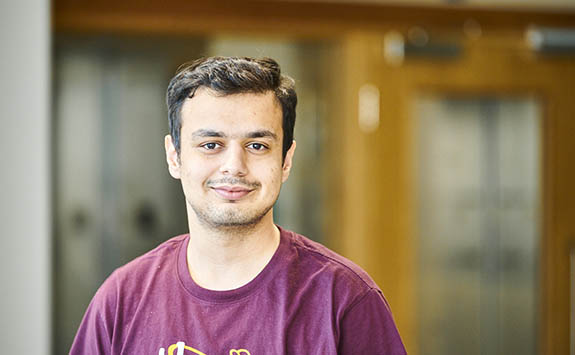
Shubh from India
MSc Cloud Computing
I chose Newcastle University because of its strong reputation in computing and the vibrant, research-led learning environment.

Hemanth from India
MSc Data Science & Artificial Intelligence
I’ve developed strong problem-solving and analytical skills, as well as practical experience with data analysis tools and programming languages.

Vaibhav from India
Computer Game Engineering MSc
My favourite thing about the MSc programme is the practical, hands-on approach to learning real game development skills.

Vivan from India
Data Science and AI MSc
This degree covers the full spectrum of modern data science and AI, from mathematical foundations to advanced topics.


Yiran from China
Data Science and AI MSc
The University also offers a lot of language assistance for international students, which helps make learning and everyday communication much easier.
What you'll learn
This programme has three phases.
Phase 1
We’ll introduce you to the core knowledge and skills in:
- machine learning
- data visualisation
- image processing
- ethical, responsible and trustworthy AI
- human-computer interaction
Some modules are taught as an intensive block, meaning you'll be taught two modules simultaneously.
You’ll also work on a group project to put your learning into practice.
Phase 2
In Phase 2, you’ll explore more advanced technical and practical modules, as well as completing another group project.
We'll introduce the aspects that govern all areas of human-centred artificial intelligence (HCAI), including:
- human-AI interaction
- complex data visualisation
- neural networks
- reinforcement learning
- transformers
- computer vision
- large language models (LLM)
During the group project, you'll develop and evaluate a solution to a complex, real-world HCAI problem.
Phase 3
In your final phase, you'll work on an individual research project. It'll give you an opportunity to:
- develop your knowledge and skills
- work in a research or development team
You can develop your project:
- at the University under an academic supervisor
- by securing an industrial placement
- working with your current employer
You'll have personalised supervision from an experienced staff member. If needed, you'll also get supervision from industry partners.
Modules
The module information on our course pages is intended to provide an example of what you will study.
Our teaching is informed by research. Course content changes periodically to reflect developments in the discipline, the requirements of external bodies and partners, and student feedback.
Full details of the modules on offer will be published through the Programme Regulations and Specifications ahead of each academic year. This usually happens in May.
Some courses have optional modules. Student demand for optional modules may affect availability.
How you'll learn
We'll teach you using a range of methods, including:
- lectures
- practical classes
- guest lectures
- problem classes
- seminars
- group and individual project work
- guided independent reading
- self-directed learning
- individual supervisor meetings
You’ll also be invited to research seminars which take place every two weeks. You’ll hear from leading researchers from around the world linking to our key areas of research.
Depending on your modules, you'll be assessed through a combination of:
- Dissertation
- Oral examination
- PC examination
- Practical lab report
- Poster
- Problem-solving exercises
- Report
- Reflective log
- Written examination
This degree uses both formative and summative assessments.
These assessments will:
- evaluate your overall understanding of the course content
- identify your strengths and areas for improvement
- encourage continuous learning and personal development
Formative assessments
Formative assessments are designed to provide ongoing feedback and support throughout the course. These assessments will help you identify your strengths and areas for improvement, fostering continuous development.
Summative assessments
Summative assessments occur at the end of each module. They're designed to test your overall comprehension and mastery of the course content. These assessments will contribute to your final grade.
Programming is a core part of the course, and you’ll develop advanced skills as part of your studies. If you’d like to build your confidence in programming or strengthen your skills further, we can offer additional training and resources alongside your classes.
The University Library team offer a wide range of support during your dissertation project. They can offer advice on:
- writing your dissertation
- developing your literature review
- data management
The School of Computing has a dedicated Wellbeing Advisor who understands the needs of our students.
They can be a confidential listening ear and provide guidance on a range of wellbeing issues.
Throughout your studies, you’ll have access to support from:
- academic staff
- academic advisers and research supervisors
- our University Student Services Team
- student representatives
- peers
You'll also be assigned an academic member of staff, who will be your academic adviser throughout your time with us. They can help with academic and personal issues.
Your teaching and learning is also supported by Canvas. Canvas is a Virtual Learning Environment. You'll use Canvas to submit your assignments and access your:
- module handbooks
- course materials
- groups
- course announcements and notifications
- written feedback
This course is delivered by the School of Computing at Newcastle University.
You'll learn from staff who are internationally recognised for their work in artificial intelligence, data science, and human-computer interaction. Many also bring valuable experience from both industry and academic research.
Our teaching staff belong to academic research groups including:
- Open Lab
- Scalable Group, including the Northern Visualization and Visual Analytics research lab
- Networked and Ubiquitous Systems Engineering (NUSE), including the National Edge AI Hub
We also have direct partnerships with the National Innovation Centre for Data and The Alan Turing Institute.
Your development
Through hands-on learning, you’ll develop practical skills to:
- critically assess research on AI methods and human-centred approaches
- solve complex, real-world problems using scalable computing tools
- handle and interpret large data sets using modern tools and techniques
- design efficient workflows to manage data at scale
- apply AI methods to support real-world decision-making and classification tasks
By the time you graduate, you’ll be able to:
- plan, carry out, and clearly communicate a substantial research project
- design and develop software solutions for human-centred challenges
- apply advanced computational methods to evaluate and improve AI systems
- use a range of programming languages, tools, and frameworks with confidence
- develop and evaluate models that support reasoning, interaction, and human-AI collaboration
Entry requirements
The entrance requirements below apply to 2026 entry.
Qualifications from outside the UK
English Language requirements
Admissions policy
This policy applies to all undergraduate and postgraduate admissions at Newcastle University. It is intended to provide information about our admissions policies and procedures to applicants and potential applicants, to their advisors and family members, and to staff of the University.
University Admissions Policy and related policies and procedures
Credit transfer and Recognition of Prior Learning
Recognition of Prior Learning (RPL) can allow you to convert existing relevant university-level knowledge, skills and experience into credits towards a qualification. Find out more about the RPL policy which may apply to this course
Your future
Industry links
We have strong industry and business links. We have an active Industrial Advisory Board, which includes companies such as:
- Meta
- Atom Bank
- Northumbrian Water
- Airbus
- Arup
- Oliver Wyman
- JP Morgan
These connections provide you with numerous benefits, including:
- internship opportunities
- guest lectures
- industry-sponsored projects
- potential employment upon graduation
Your career
This programme helps you prepare for a wide range of exciting careers at the intersection of people and technology. You’ll graduate with the technical expertise, critical thinking, and human-focused mindset that employers are looking for.
With this degree, you won’t just learn how to build AI systems—you’ll learn how to make them safe, ethical, and ready for real-world use. You could:
- contribute to the development of responsible AI technologies, ensuring systems are not only technically sound but also aligned with human values and ethical standards
- work in or lead a responsible AI team, helping organisations develop and enforce policies for fair and inclusive AI
- take on an advisory role, guiding companies on how to use AI products safely, responsibly, and effectively
- bridge the gap between technical teams and users, making sure AI solutions are accessible, transparent, and people-focused
This course prepares you to influence how AI is designed, implemented, and understood across sectors – putting people at the heart of intelligent systems.
Graduate roles might include:
- AI Specialist
- Machine Learning Engineer
- User Experience (UX) Researcher or Designer
- Data Scientist or Data Analyst
- Human Factors Specialist
- AI Product Manager or Consultant
You could go on to work in industries such as:
- tech
- healthcare
- finance
- education
- the public sector
- creative industries
You might choose to pursue a PhD in Human-Centred Artificial Intelligence or a related field.
Our Careers Service
Our expert Careers Service is here to help you take the next steps in your professional life. We will support you while you’re studying with us and for up to three years after you graduate.
You will have access to expert one-to-one advice and guidance through our campus careers centre and online, along with digital resources, workshops, networking opportunities, and careers and recruitment events.
We’ve been awarded 5 QS Stars for Student Employability (2025). Many of our degrees are shaped by strong links with national and international businesses. We are committed to helping you access real-world experience opportunities and develop key skills through paid work placements and internships.
Facilities
While studying this course you'll be based in the Urban Sciences Building. You'll have access to a range of state-of-the-art facilities and technology designed to support hands-on learning and projects.
The MakerSpace offers tools and equipment for prototyping and physical computing.
We also have a state-of-the-art data visualisation lab including:
- £250,000 stereoscopic wall display
- large touchscreen display
- eye trackers
- hand-tracking devices
Additionally, the School provides a well-equipped media studio featuring podcast production facilities. You’ll also be able to book professional photography, video, and audio capture equipment. For immersive technology exploration, VR equipment is also available.
To further enhance your learning, you can work with our robots, including Pepper and Nao, which are available within the School for project use.
Urban Sciences Building
The School of Computing is based in the £58 million Urban Sciences Building (USB), a flagship development located on the £350 million Newcastle Helix regeneration site in the heart of Newcastle. It brings together:
- academia
- the public sector
- communities
- business and industry
Postgraduate student facilities
As a Master's student, you'll have access to specialist teaching spaces and facilities in the USB. These are only available to postgraduate students.
Wellbeing and inclusivity are at the heart of our School. The USB has several wellbeing spaces for students, including a prayer room for all faiths and none. This space can be used for prayer or quiet reflection.
Fees, Funding and Scholarships
Tuition fees for 2026 entry (per year)
As a general principle, you should expect the tuition fee to increase in each subsequent academic year of your course, subject to government regulations on fee increases and in line with inflation.
Depending on your residency history, if you’re a student from the EU, other EEA or a Swiss national, with settled or pre-settled status under the EU Settlement Scheme, you’ll normally pay the ‘Home’ tuition fee rate and may be eligible for Student Finance England support.
EU students without settled or pre-settled status will normally be charged fees at the ‘International’ rate and will not be eligible for Student Finance England support. You may be eligible for a scholarship worth 25% off the international fee. Search our funding database.
If you are unsure of your fee status, check out the latest guidance.
Scholarships
We support our EU and international students by providing a generous range of Vice-Chancellor's automatic and merit-based scholarships. See our searchable postgraduate funding page for more information.
Search for funding and scholarships
Find funding available for your course
What you're paying for
Tuition fees include the costs of:
- matriculation
- registration
- tuition (or supervision)
- library access
- examination
- re-examination
- graduation
Find out more about:
If you are an international student or a student from the EU, EEA or Switzerland and you need a visa to study in the UK, you may have to pay a deposit.
You can check this in the How to apply section.
If you're applying for funding, always check the funding application deadline. This deadline may be earlier than the application deadline for your course.
For some funding schemes, you need to have received an offer of a place on a course before you can apply for the funding.
How to apply
Using the application portal
The application portal has instructions to guide you through your application. It will tell you what documents you need and how to upload them.
You can choose to start your application, save your details and come back to complete it later.
If you’re ready, you can select Apply Online and you’ll be taken directly to the application portal.
Alternatively you can find out more about applying on our applications and offers pages.
Apply Online
Open days and events
Find out about how you can visit Newcastle in person and virtually
Overseas events
We regularly travel overseas to meet with students interested in studying at Newcastle University.
Get in touch
Questions about this course?
If you have specific questions about this course you can contact:
Email: computing.admissions@newcastle.ac.uk
School of Computing
ncl.ac.uk/computing
Enquiries
If you've got a question about your application, send us an enquiry via the application portal you applied through.
If you haven't applied yet, or have a general enquiry, you can send your questions via our enquiry form.
Chat to our students
Choosing a university is a big decision. If you've got questions about a particular course, student life or the city of Newcastle, why not chat to our friendly students or graduates!
Keep updated
We regularly send email updates and extra information about the University.
Receive regular updates by email
Social Media
Get involved with the School of Computing.