Chemical Engineering (Industry) MEng Honours
2027 entry information
- Study mode and duration
- Full time: 4 years
- UCAS code
- H815
- UCAS institution name and code
- NEWC / N21
- Tuition fees (Year 1)
-
FT Home: £10,050
FT International: £30,700 Scholarships available - Typical entry requirements
-
A-Level: ABB
IB: 32 points
View alternative offers - Course delivery
- On Campus
- Work placement opportunity Study abroad option Professional accreditation and recognition
Course overview
You'll study a broad curriculum covering the theory and practical application of chemical engineering, including how to use industrial apparatus in our very own pilot plant.
In your third year, you'll spend a paid year in industry, gaining invaluable work experience and building industry contacts. You will work in a team of professional engineers and scientists to apply your knowledge to an industrial problem defined by your host company. Your technical skills will be assessed through an industrial design project and you'll complete selected chemical engineering topics by distance learning.
The School and the University Careers Service will help you find potential employers and guide you through the application process. We have strong links with over 100 companies in the North East and across the UK.
On your return to university in the fourth year, you'll study a range of topics designed to build on the technical expertise developed during your placement.
BEng or MEng?
Both our BEng degree and specialist MEng degrees provide a pathway to becoming a Chartered Engineer. This is one of the most recognisable international engineering qualifications.
Our MEng degrees are a direct route to becoming a Chartered Engineer (CEng). You don’t need to study any more qualifications after your degree to work towards chartered status.
Our three-year BEng degree can also lead to Chartered Engineer status. However, you’ll need to complete further study, such as an approved master’s degree.
Additional information
Flexible degree structure
Our Chemical Engineering BEng Honours degree offers the same programme as our MEng Chemical Engineering degrees for the first two years.
This means you can transfer between our chemical engineering degrees, up to the end of stage 2, if you find your interests change.
You must achieve the appropriate academic standard to transfer from a BEng to an MEng degree.
Quality and ranking
Professional accreditation and recognition
Professional accreditations are reviewed regularly by professional bodies to ensure they meet the latest industry practices and regulatory standards. This keeps your degree rigorous, relevant, and highly valued by employers, providing a clear pathway into your chosen career.
If you are studying an accredited degree and considering a career in Europe after graduation, it is important to stay informed about international standards. The best resource for current information is the UK Government's guidance on recognition of UK professional qualifications in EU member states.
This official resource provides essential details on:
- whether your profession is regulated in another country.
- the specific steps you need to take to practice abroad.
- which organisations you should contact to begin the process.
Our students


John from India
Geospatial Surveying and Mapping BEng
My course focuses on land and marine surveying applications. What sets the University apart in this area are the dedicated labs.


Ela from Türkiye
Mechanical Engineering BEng
Newcastle University stood out for its welcoming atmosphere, with hundreds of clubs and societies, and its excellent graduate employability record.


Katie from United Kingdom
Civil and Structural Engineering BEng
The structure of the course has allowed me to mix with engineers from other disciplines and the facilities at the university are excellent.


Edna from Uganda
Chemical Engineering BEng
This course is shaping me into a well-rounded engineer, ready to make an impact in multiple industries.

Max from United Kingdom
Naval Architecture and Marine Engineering MEng
The course is very versatile - you develop knowledge that can be applied across lots of different disciplines and the career aspects are great too.


Orian from Hong Kong
Mechanical Engineering BEng
My engineering degree at Newcastle is a good balance of solid theory and practical application.

Ethan from United Kingdom
Civil Engineering MEng
I’ve done summer placements where I gained hands-on experience in engineering surveying and participated in community outreach for social value.
What you'll learn
Modules
The information below is intended to provide an example of what you will study.
Most degrees are divided into stages. Each stage lasts for one academic year, and you'll complete modules totalling 120 credits by the end of each stage.
Full details of the modules on offer will be published through the Programme Regulations and Specifications ahead of each academic year. This usually happens in May.
Our teaching is informed by research. Course content may change periodically to reflect developments in the discipline, the requirements of external bodies and partners, and student feedback.
In Stage 1 you'll cover the core principles of engineering, mathematics and science. These include chemistry, thermodynamics, the principles of chemical engineering, and engineering mathematics.
Modules
| Compulsory Modules | Credits |
|---|---|
| Thermodynamics | 10 |
| Transfer Processes | 25 |
| Computing and Numerical Methods | 10 |
| Data Analysis in Process Industries | 5 |
| Chemical Engineering Laboratory | 10 |
| Chemistry for Chemical Engineers | 20 |
| Principles of Chemical Engineering | 20 |
| Engineering Mathematics I | 20 |
Your Stage 2 modules will expand on Stage 1. You’ll develop existing skills and knowledge while introducing new areas. These include reactor engineering, separation processes, and process measurement, dynamics and control.
Modules
Stage 3 will be spent on placement within a chemical/process engineering company. During this time, you'll work as part of a team of professional engineers on an industrial problem defined by your host company. You'll also be able to complete chemical engineering modules via distance learning.
This is subject to successful completion of Stage 2 with an overall pass threshold of 65%.
Modules
| Compulsory Modules | Credits |
|---|---|
| Industrial Design Project | 60 |
| Process Control (Industry) | 10 |
| Chemical Engineering Knowledge (Industry) | 50 |
In your final stage, you will return to the university and study carefully selected modules, chosen to enhance the technical experience gained during your placement. You will also complete a research project and individual design project.
Modules
| Compulsory Modules | Credits |
|---|---|
| Separation Processes 2 | 15 |
| Reactor Systems Engineering | 15 |
| Advanced Design Project | 20 |
| MEng Research Project | 60 |
| Optional Modules | Credits |
|---|---|
| Process Intensification | 10 |
| Big Data Analytics in the Process Industries | 10 |
| Bioprocess Engineering | 10 |
| Formulated Products | 10 |
We base these figures and graphs on the most up-to-date information available to us. They are based on the modules chosen by our students in 2025-26.
Teaching time is made up of:
- scheduled learning and teaching activities. These are timetabled activities with a member of staff present.
- structured guided learning. These are activities developed by staff to support engagement with module learning. Students or groups of students undertake these activities without direct staff participation or supervision
How you'll learn
Teaching methods
As a Newcastle University student, you'll graduate with a strong skillset. You'll make connections with industry experts and focus on relevant skills, including:
- problem-based learning for the first three years based around industrial case studies – excellent preparation for life as a professional engineer
- lectures delivered by practising industry experts covering issues surrounding safety management and environmental protection
- industry representation on our Board of Studies with direct input into our degrees
- industry links with over 100 chemical engineering companies, resulting in sponsorship and placement opportunities and plant visits
We use case study-led teaching, so your learning has real-world relevance. Teaching is through a combination of:
- lectures
- tutorials
- seminars
- computer practice sessions
- extensive practical laboratory work
- group work on case studies and design projects
Assessment methods
You'll be assessed through a combination of:
-

Assessments
-

Assignments – written or fieldwork
-

Case studies
-

Coursework
-
Dissertation or research project
-
Examinations – practical or online
-

Group work
-

Practical sessions
-

Presentations
-
Projects
-

Reflective report/journal
-

Reports
Skills and experience
Research skills
During your final stage, you will complete a substantial research project. You will also develop comprehensive research skills throughout your degree and during your year in industry.
Business skills
In Stage 3, you will embark on a paid work placement with an approved company. This will allow you to gain invaluable work experience while also building an enviable network of industry contacts.
Practical skills
Throughout your studies you'll reinforce your learning and gain hands-on experience through:
- a 9-month placement in industry
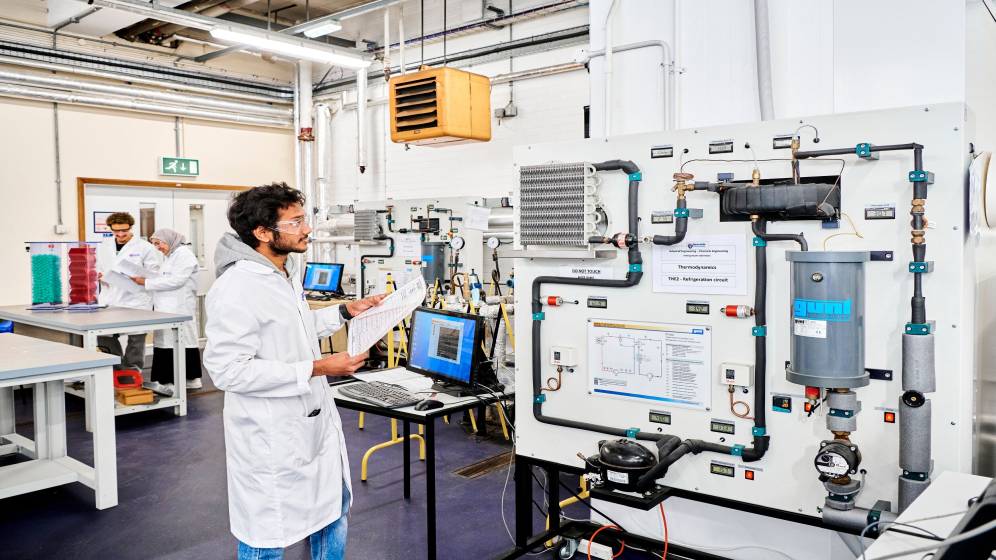
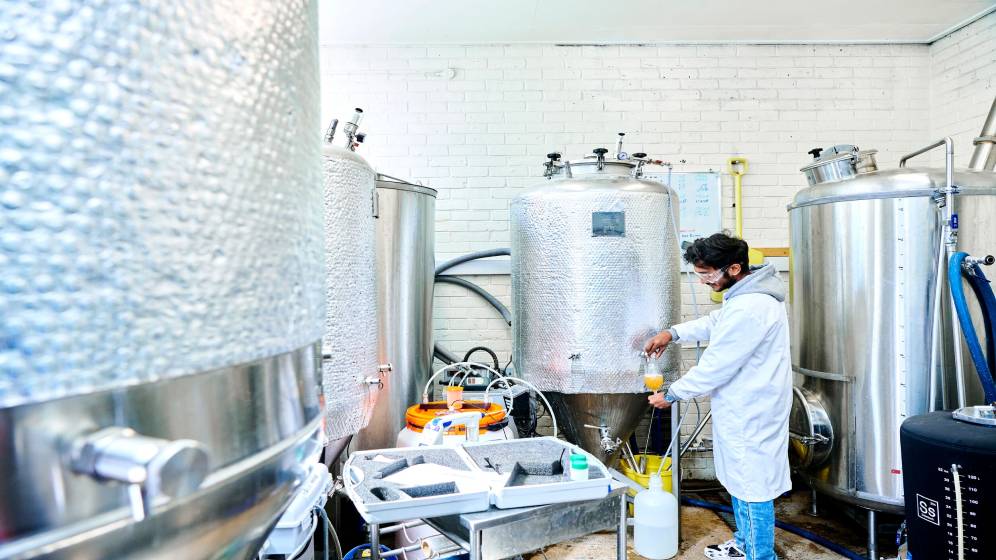
- practical sessions carried out in our Pilot Plant and Undergraduate Teaching Laboratory
- work on real-world engineering projects informed by industry-leading companies
- experience with industry-standard chemical engineering software in our dedicated computer suites
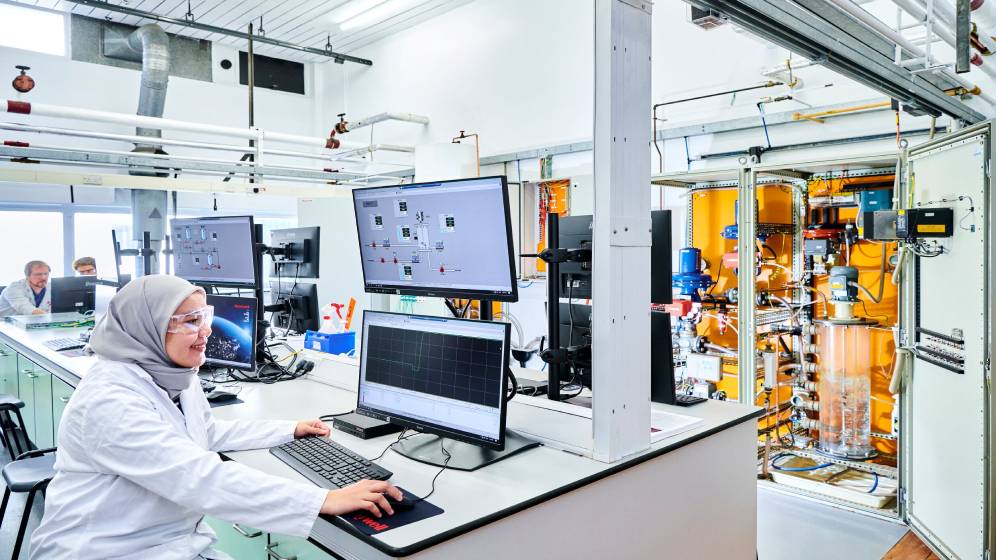
- cutting-edge process control software and equipment in our dedicated Honeywell Process Control Lab, co-designed with our industrial partner, Honeywell, which is also used for industrial training
Support
To support you in your studies, all new students will receive a start-up pack containing essential personal protective equipment.
You'll be supported by an academic adviser (an academic member of staff) throughout your degree. They can help you with academic and personal issues.
You'll also have access to a peer mentor (a fellow student) in your first year. They can help you settle in and answer any questions you have.
Opportunities
Work placement
Get career ready with a work placement and leave as a confident professional in your field. You'll apply to spend 9 to 12 months working in any organisation in the world, and receive University support from our dedicated team to secure your dream placement. Work placements take place in Stage 3.
You'll gain first-hand experience of working in the sector, putting your learning into practice and developing your professional expertise.
Placements are subject to availability.
You may be interested in
Entry requirements
All candidates are considered on an individual basis and we accept a broad range of qualifications.
The entrance requirements and offers below apply to 2027 entry.
Our entry requirements and other information will be finalised in September 2026.
| A-Level | |
|---|---|
| International Baccalaureate | |
|---|---|
Other UK and the Republic of Ireland qualifications
Alternative offers at Newcastle
Through one of our contextual or alternative offer routes, you could receive an offer of up to three grades lower than the typical requirements.
Contextual offers
We use certain contextual data from your UCAS form, alongside your application, to consider challenges that you may have faced in your education and the potential effect this may have had on your qualifications. This means you may be eligible to receive a lower contextual offer.
PARTNERS offers
One of the largest and longest support entry routes to university of its kind for students from underrepresented backgrounds. We support applicants from application through to study.
Realising Opportunities offers
A unique programme delivered in collaboration with 10 leading, research-intensive universities in the UK. The programme is open to students in Year 12/first year of college.
Pathways to Newcastle offers
Pathways to Newcastle, our national skills entry route, is available for specific subject areas.
High Performance Athletes
We support promising athletes at the application stage, who compete in regional, national or international levels in their sport.
Qualifications from outside the UK
English Language requirements
International Pathway and English Language courses
International Pathway courses are specialist programmes designed for international students who want to study in the UK. We provide a range of study options for international students in partnership with INTO.
These courses are specifically designed for international students who want to study in the UK and progress onto one of our undergraduate degrees. Our International Study Centre, has a range of study options including:
- International Foundation
- International Year One
- English Language courses
Find out more about International Pathway courses
Admissions policy
This policy applies to all undergraduate and postgraduate admissions at Newcastle University. It is intended to provide information about our admissions policies and procedures to applicants and potential applicants, to their advisors and family members, and to staff of the University.
University Admissions Policy and related policies and procedures
Credit transfer and Recognition of Prior Learning
Recognition of Prior Learning (RPL) can allow you to convert existing relevant university-level knowledge, skills and experience into credits towards a qualification. Find out more about the RPL policy which may apply to this course.
Your future
Chemical Engineering is a truly global profession with worldwide opportunities leading to well-paid and rewarding careers.
As a chemical engineering graduate with industry experience, you'll be highly employable and possess valuable transferable skills, such as problem solving and innovation.
Many of our graduates go on to work for high-profile employers within sectors including:
- biotechnology
- chemicals
- energy
- environment
- green technology
- oil and gas
- pharmaceuticals
- water
Recent graduates have taken up roles including:
- chemical engineer
- energy marketing & trading analyst
- graduate engineer
- process engineer
- safety engineer
- technology risk associate
within companies such as:
- Air Products
- Arup
- BAE Systems
- GlaxoSmithKline
- Johnson Matthey
- Mott MacDonald
- Nestle
- Nissan
- Proctor & Gamble
Industry links
Strong industry links ensure you will receive the most relevant, up-to-date teaching, while providing opportunities for guest lectures, plant visits, and your industry placement.
Consultants from industry deliver classes on current industrial practice, providing the latest insight into issues such as safety and sustainability.
Careers support
Our Careers Service is one of the largest and best in the country, and we have strong links with employers. We provide an extensive range of opportunities to all students through our ncl+ initiative.
Facilities and environment
Facilities
You'll have access to a great range of facilities and equipment during your time at Newcastle, including:
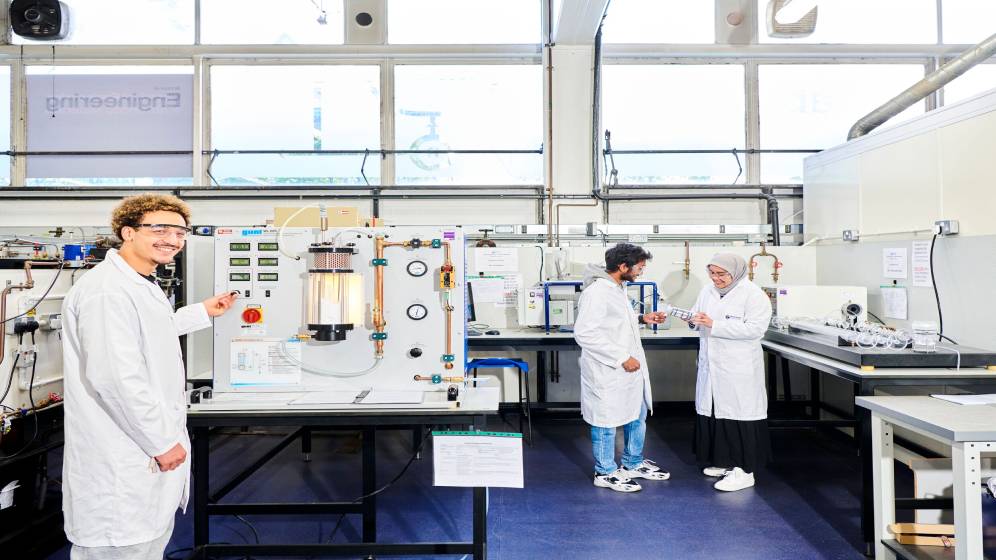
- a state-of-the-art undergraduate teaching lab, providing access to a range of small-scale unit operations and the latest equipment
- a recently upgraded pilot plant laboratory
- high-specification fume cupboards for handling volatile chemicals
- two dedicated computing suites, running specialised industry-standard computer software


Tuition fees and scholarships
Tuition fees for academic year 2027-2028
| Qualification: MEng Honours | |
|---|---|
|
Home students full time 4 years |
Tuition fees (Year 1)
£10,050 |
|
International students full time 4 years |
Tuition fees (Year 1)
30,700 |
Year abroad and additional costs
For programmes where you can spend a year on a work placement or studying abroad, you will receive a significant fee reduction for that year.
Some of our degrees involve additional costs which are not covered by your tuition fees.
Scholarships
Find out more about:
How to apply
Apply through UCAS
To apply for undergraduate study at Newcastle University, you must use the online application system managed by the Universities and Colleges Admissions Service (UCAS). All UK schools and colleges, and a small number of EU and international establishments, are registered with UCAS. You will need:
- the UCAS name and institution codes for Newcastle University (NEWC/N21)
- the UCAS code for the course you want to apply for
- the UCAS 'buzzword' for your school or college
If you are applying independently, or are applying from a school or college which is not registered to manage applications, you will still use the Apply system. You will not need a buzzword.
Apply through UCASInternational students can apply through an agent
International students often apply to us through an agent. Have a look at our recommended agents and get in touch with them.
Open days and events
UK open days
You'll have a number of opportunities to meet us throughout the year at our on-campus and virtual open days.
You'll be able to:
- explore our beautiful campus
- find out about our vibrant city
- discover what students think about studying at Newcastle
You'll also have the opportunity to speak to academic staff and find out more about the subjects you're interested in.
Find out about how you can visit Newcastle in person and virtually.
Worldwide events
We regularly travel overseas to meet with students interested in studying at Newcastle University. Visit our events calendar to find out when we're visiting your region.
Online events
Get in touch
By phone
Call us on +44 (0) 191 208 3333 and press option 1. Our opening hours are Monday to Friday 10am until 4pm.
Online
Keep updated
We regularly send email updates and extra information about the University.
Receive regular updates by email