Transport Engineering, Planning and Management MSc
- Study mode and duration
- Course code
- 5440f
- Fees (per year)
- Typical entry requirements
-
View full entry requirements - Course delivery
- On Campus
Course information for entry year:
Overview
You’ll learn from academics involved in world-leading research, tackling transport challenges with global impact. You’ll also benefit from access to specialist facilities and a research-led learning environment.
Our Master's programme is for both practising professionals and graduates in:
- civil engineering
- transport engineering
- any other engineering disciplines
- operation research
- geography and spatial planning
- economics and social science
- environmental sciences
During the course, you'll:
- develop skills required for a successful career in transport
- learn about the principles of transport planning and travel demand forecasting
- learn about the latest techniques and research in mobility planning
- put learning into practice in your own research project
- establish a responsible attitude towards the needs of society, the environment and transport safety considerations
- benefit from our strong industrial engagement through guest lectures, site visits and study tours
You’ll graduate with the knowledge and practical experience needed for a wide range of careers across the transport sector.
Important information
We've highlighted important information about your course. Please take note of any deadlines.
Please rest assured we make all reasonable efforts to provide you with the programmes, services and facilities described. However, it may be necessary to make changes due to significant disruption, for example in response to Covid-19.
View our Academic experience page, which gives information about your Newcastle University study experience for the academic year 2025-26.
See our terms and conditions and student complaints information, which gives details of circumstances that may lead to changes to programmes, modules or University services.
Quality and ranking
Professional accreditations are reviewed regularly by professional bodies to ensure they meet the latest industry practices and regulatory standards. This keeps your degree rigorous, relevant, and highly valued by employers, providing a clear pathway into your chosen career.
If you are studying an accredited degree and considering a career in Europe after graduation, it is important to stay informed about international standards. The best resource for current information is the UK Government's guidance on recognition of UK professional qualifications in EU member states.
This official resource provides essential details on:
- whether your profession is regulated in another country.
- the specific steps you need to take to practice abroad.
- which organisations you should contact to begin the process.
Our students


Aung from Myanmar
Transport Engineering, Planning and Management MSc
My first time coming to Newcastle was after a trip to London. The city is beautiful with amazing bridges going over the Tyne river.


Afliana from Indonesia
Transport Engineering, Planning and Management MSc
The opportunity to engage with and learn from a professional network has made the educational experience incredibly meaningful.
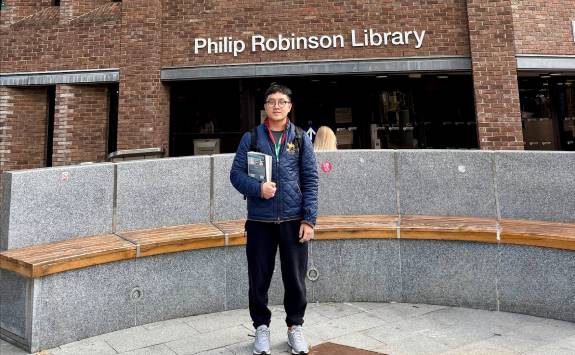

Dinh from Vietnam
Transport Engineering, Planning and Management MSc
I've been able to connect with major companies & corporations in the industry, participate in exhibitions and seminars, including real-world projects.
What you'll learn
You’ll develop the practical, technical, and professional skills needed to understand and improve modern transport systems.
Through research-led teaching and real-world projects, you’ll learn how transport systems are planned, managed, and operated.
You’ll build core skills in:
- information processing
- numeracy
- data collection and analysis
- problem solving
- computer literacy
- teamwork
- communication and presentation
- planning and organisation
These skills will prepare you for a successful career in the transport engineering sector. You will learn to analyse transport challenges and develop practical solutions for real-world projects.
Modules
The module information on our course pages is intended to provide an example of what you will study.
Our teaching is informed by research. Course content changes periodically to reflect developments in the discipline, the requirements of external bodies and partners, and student feedback.
Full details of the modules on offer will be published through the Programme Regulations and Specifications ahead of each academic year. This usually happens in May.
Some courses have optional modules. Student demand for optional modules may affect availability.
Individual modules can be taken as Continuing Professional Development (CPD).
How you'll learn
We have a multidisciplinary approach to teaching. You'll engage with fellow students across all key civil engineering disciplines. This offers a rich and diverse learning experience.
Our teaching covers a broad range of subjects and typically consists of:
- lectures
- seminars
- practical sessions including:
- transport-related software training
- presentations
- debates
- group work including:
- varied coursework assignments
- surveys
- research activity
- reports
- video production
You'll be taught directly by industry. You'll gain the key technical skills required in the sector allowing you to put theory into practice.
Depending on your modules, you'll be assessed through a combination of:
- Aural examination
- Case study
- Computer assessment
- Professional skills assessments
- Oral presentation
- Practical lab report
- Portfolio
- Problem-solving exercises
- Report
- Written examination
- Written exercise
Throughout your studies, you’ll have access to support from:
- academic staff
- academic advisers and research supervisors
- our University Student Services Team
- student representatives
- peers
You'll also be assigned an academic member of staff, who will be your academic adviser throughout your time with us. They can help with academic and personal issues.
Your teaching and learning is also supported by Canvas. Canvas is a Virtual Learning Environment. You'll use Canvas to submit your assignments and access your:
- module handbooks
- course materials
- groups
- course announcements and notifications
- written feedback
Professor Margaret Carol Bell CBE
Science City Professor of Transport and the Environment
Areas of expertise:
- traffic and environment monitoring
- traffic modelling management
- traffic control
Senior Lecturer in Highway Engineering
Areas of expertise:
- highway geometry, design standards, safety and consistency
- cycle behaviour and infrastructure design
- road pavement materials, construction and environmental LCA
- traffic management at highway incidents
Professor of Transport
Chief Scientific Adviser for the Department for Transport (DfT)
Areas of expertise:
- Intelligent Transport Systems (ITS)
- electromobility
- connected and autonomous vehicles
- Smart Cities, Big Data and Internet of Things
Senior Lecturer Transport Engineering
Areas of expertise:
- Urban mobility data computing
- Motorway traffic flow control and management
- Digital twins for smart transport
- Resilience and sustainability in transport systems
- Connected, Autonomous, Shared, and Electric (CASE) transport modelling and operations
- Data-centric approaches in transportation
Lecturer in Human Systems Integration
Areas of expertise:
- human factors
- user centred design
- user experience
- safety
- rail
Senior Researcher in Inclusive Mobility
Areas of expertise:
- Intelligent Transport Systems (ITS)
- Connected and Automated Vehicles (CAV)
- alternative fuels
- inclusive mobility (i.e. for disabled and older people)
- funding applications, project management
- trail design and evaluation
- stakeholder engagement
Senior Research Associate of Intelligent Transport Systems
Lecturer in Air Pollution
Your development
Throughout this degree you'll:
- gain an understanding of transport policy and systems being used and developed in other countries
- increase your key knowledge of ITS systems and their:
- function
- application
- benefits
- identify models to simulate individual choices and forecast how individuals make decisions
- develop advanced methodological skills related to transport demand modelling and forecasting using key software
- become aware of the legislation and procedures affecting the approval of transport schemes
- hone your ability to collect the relevant data for:
- understanding
- modelling
- planning consumer behaviour
- develop transport research methods that will allow you to undertake a project and dissertation in transport engineering
Depending on your chosen stream and modules, you'll enhance your career prospects by gaining key skills in:
- project and planning
- business enterprise
- future technologies
- behavioural analyses
Entry requirements
The entrance requirements below apply to 2027 entry.
Qualifications from outside the UK
English Language requirements
Admissions policy
This policy applies to all undergraduate and postgraduate admissions at Newcastle University. It is intended to provide information about our admissions policies and procedures to applicants and potential applicants, to their advisors and family members, and to staff of the University.
University Admissions Policy and related policies and procedures
Credit transfer and Recognition of Prior Learning
Recognition of Prior Learning (RPL) can allow you to convert existing relevant university-level knowledge, skills and experience into credits towards a qualification. Find out more about the RPL policy which may apply to this course
Pre-Master’s and English Language courses
Need an alternative route to study this course? Our International Study Centre offers Pre-Master’s degrees and English language courses to prepare you for study.
Your future
Graduate destinations
This vocationally focused programme prepares you for careers across civil and transport engineering worldwide.
Recent graduate destinations include:
- AECOM
- Arup
- Cundall
- Jacobs
- Milestone
- PTV
- Systra
This course also provides a route into PhD level study.
Industrial links
We have strong industrial links. Our degree programmes are shaped by industry and government policy. You'll typically benefit from this engagement through:
- industry guest lectures
- study tours
- site visits
- projects
- Careers Service support
Our Careers Service
Our expert Careers Service is here to help you take the next steps in your professional life. We will support you while you’re studying with us and for up to three years after you graduate.
You will have access to expert one-to-one advice and guidance through our campus careers centre and online, along with digital resources, workshops, networking opportunities, and careers and recruitment events.
We’ve been awarded 5 QS Stars for Student Employability (2025). Many of our degrees are shaped by strong links with national and international businesses. We are committed to helping you access real-world experience opportunities and develop key skills through paid work placements and internships.
Facilities
Based within Newcastle’s integrated School of Engineering, you’ll have access to specialist labs, equipment and workshops used across all engineering disciplines, including:
- Heavy Structures Lab
- Geotechnical and Materials Labs
- Novak Hydraulic Lab
- Makerspace for prototyping and innovation
- High-performance computing systems
- Analytical facilities
- Bio-labs
- National Green Infrastructure Facility
- Urban Observatory
These facilities support practical, hands-on learning and help you develop real-world engineering skills.
Fees, Funding and Scholarships
Tuition fees for 2027 entry (per year)
As a general principle, you should expect the tuition fee to increase in each subsequent academic year of your course, subject to government regulations on fee increases and in line with inflation.
Depending on your residency history, if you’re a student from the EU, other EEA or a Swiss national, with settled or pre-settled status under the EU Settlement Scheme, you’ll normally pay the ‘Home’ tuition fee rate and may be eligible for Student Finance England support.
EU students without settled or pre-settled status will normally be charged fees at the ‘International’ rate and will not be eligible for Student Finance England support. You may be eligible for a scholarship worth 25% off the international fee. Search our funding database.
If you are unsure of your fee status, check out the latest guidance.
Scholarships
We support our EU and international students by providing a generous range of Vice-Chancellor's automatic and merit-based scholarships. See our searchable postgraduate funding page for more information.
Search for funding and scholarships
Find funding available for your course
What you're paying for
Tuition fees include the costs of:
- matriculation
- registration
- tuition (or supervision)
- library access
- examination
- re-examination
- graduation
Find out more about:
If you are an international student or a student from the EU, EEA or Switzerland and you need a visa to study in the UK, you may have to pay a deposit.
You can check this in the How to apply section.
If you're applying for funding, always check the funding application deadline. This deadline may be earlier than the application deadline for your course.
For some funding schemes, you need to have received an offer of a place on a course before you can apply for the funding.
How to apply
Using the application portal
The application portal has instructions to guide you through your application. It will tell you what documents you need and how to upload them.
You can choose to start your application, save your details and come back to complete it later.
If you’re ready, you can select Apply Online and you’ll be taken directly to the application portal.
Alternatively you can find out more about applying on our applications and offers pages.
Apply Online
Open days and events
Find out about how you can visit Newcastle in person and virtually
Overseas events
We regularly travel overseas to meet with students interested in studying at Newcastle University.
Get in touch
Questions about this course?
If you have specific questions about this course you can contact:
School of Engineering
School Admissions Team
Email: engineeringadmissions@newcastle.ac.uk
Enquiries
If you've got a question about your application, send us an enquiry via the application portal you applied through.
If you haven't applied yet, or have a general enquiry, you can send your questions via our enquiry form.
Keep updated
We regularly send email updates and extra information about the University.
Receive regular updates by email
Chat to our students