Meet Hadis
Sustainable Chemical Engineering MSc
About Hadis
I'm originally from Iran and completed my MSc in Sustainable Chemical Engineering at Newcastle University, graduating in 2025. I'm currently working as a Research Assistant in the engineering sector.
The aspect I enjoy most about my job is the freedom to be creative and explore ideas without strict limitations. I can test different approaches, learn through trial and error, and develop solutions through continuous improvement. Although mistakes are part of the process, the supportive environment allows me to learn from them and apply those lessons to improve my work in future projects.
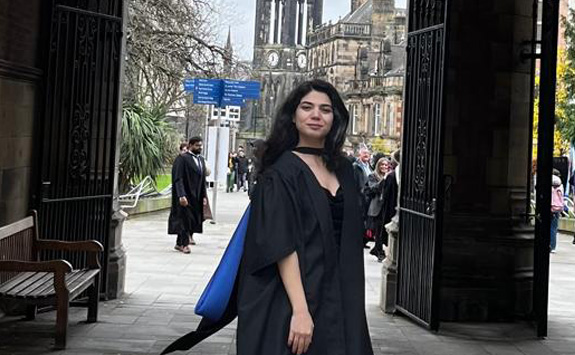
What my degree was really like
Studying MSc Sustainable Chemical Engineering at Newcastle University was a very rewarding experience, especially because of the hands-on, project-based teaching style. What stood out most for me was the strong focus on group work and real problem-solving rather than simple memorisation. I really enjoyed collaborating with classmates and working on practical challenges that helped me truly understand and apply the knowledge.
Another aspect I really appreciated was the module structure, where we focused on one module at a time each month. Coming from a bachelor’s degree with multiple simultaneous subjects, this approach was very new to me, but extremely effective. It allowed me to fully concentrate on one topic, explore it in depth, and build a deeper understanding rather than a surface-level one. Once a module was completed, I felt confident in the knowledge and could also connect it to later modules when needed.
Why I chose to study in the UK
I chose to study in the UK because I wanted to experience education beyond my home country and explore a different academic and cultural environment out of curiosity and a genuine love for learning. During my research, I found that UK universities are known for their strong global rankings, high-quality education, and excellent student support. What stood out most to me was the focus on preparing students for real-world careers by developing practical skills and encouraging the application of knowledge to solve real-world problems, which was exactly what I was looking for at that stage of my academic journey.
Why I chose Newcastle University
I chose Newcastle University because of its strong academic reputation and high ranking, as well as the wide range of specialised modules it offers. When I reviewed the course content, I found that modules closely matched my interests and reflected the skills needed for future industry challenges. Modules included:
- modelling materials and processes
- lifetime prediction and design for reliability
- environmental impact assessment
- sustainable industry and LCA applications
- renewable energy and hydrogen systems
The alignment with real-world and future-focused topics made Newcastle University the ideal choice for my studies.
How my subject has prepared me for the future
This degree prepares students for their future by developing practical problem-solving skills and encouraging independent thinking. Throughout the course, we also improved essential skills such as teamwork and presentation, which are extremely valuable in professional and research environments.
A word on my career journey so far
After graduating from my MSc in Chemical Engineering at Newcastle University, I began exploring opportunities in the field and actively applied for roles related to my discipline. Although entering the industry was challenging at first, the experience helped me build resilience and clarified my interest in research and applied engineering work. I have also discovered that I really enjoy research, and I'm now considering pursuing a PhD, potentially at Newcastle University, to further develop my skills and academic interests.
My dissertation played a major role in shaping my current career path, and the support from my supervisors helped me build confidence for the next steps in my professional journey.
Most importantly, don’t be afraid of making mistakes, because that is often where the most important learning happens.
Related student stories


Lauren from United Kingdom
Advanced Computer Science MSc
The course has given me the opportunity to build on what I learnt during my undergraduate degree and explore areas of computing in much more depth.
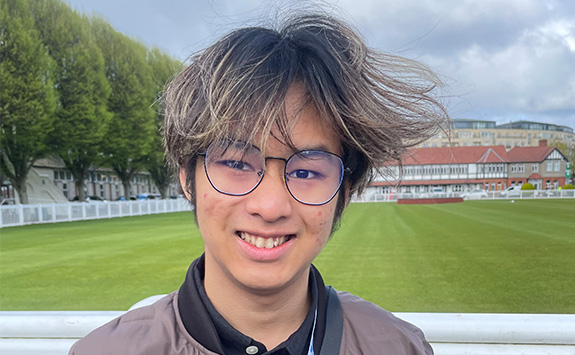

Aung from Myanmar
Transport Engineering, Planning and Management MSc
My first time coming to Newcastle was after a trip to London. The city is beautiful with amazing bridges going over the Tyne river.


John from India
Geospatial Surveying and Mapping BEng
My course focuses on land and marine surveying applications. What sets the University apart in this area are the dedicated labs.

Aaryan from India
Computer Science BSc
To support my studies, I’ve been awarded a VCIS (Vice Chancellor International Scholarship) worth £4,000. The rest of my fees are self-funded.


Lukman from Nigeria
Mechanical and Systems Engineering PhD
Newcastle University really welcomes international students. It’s clear that the institution strongly values inclusion and diversity.
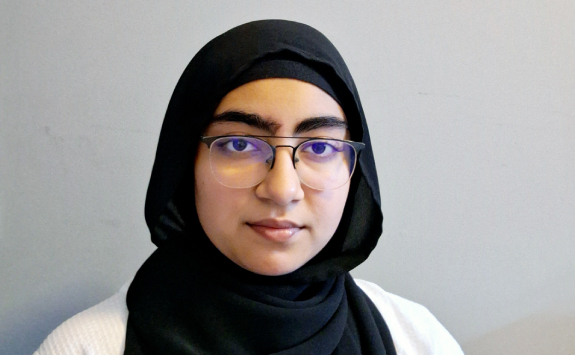
Madiha from India
English Literature with Creative Writing BA
The application process was straightforward and I felt very supported by the University throughout.


Jasmine from Malaysia
Dietetics MDiet
Newcastle feels like somewhere between a big city and a small town.
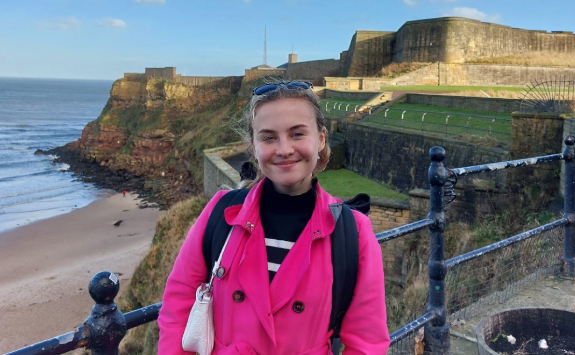

Hana from Czechia
International Business Management BSc
I’m not sure what I want to do in the future, being able to study lots of different modules is giving me the chance to explore all the possibilities.

Bernardo from Brazil
Law PhD
I am deeply passionate about the RED (Researcher Education and Development) programme - it has been an integral part of my PhD journey.