Cognitive Science BSc Honours
2027 entry information
- Study mode and duration
- Full time: 3-4 years
- UCAS code
- C859
- UCAS institution name and code
- NEWC / N21
- Tuition fees (Year 1)
-
FT Home: £10,050
FT International: £31,950 Scholarships available - Typical entry requirements
-
A-Level: ABB
IB: 32 points
View alternative offers - Course delivery
- On Campus
- Work placement opportunity Study abroad option
Course overview
Are you curious about how the human mind functions? Fascinated by how and why people communicate? Could the brain be a type of computer or is it nothing like a machine at all?
Cognitive Science, like Psychology, aims to understand the mind's structure and how the brain's mental processes translate into behaviour. The field emerged in the 1950s as a response to Behaviourism, which argued that behaviour is only shaped by past experience and conditioning. This theory became difficult to defend, especially for researchers studying language development, which Behaviourism couldn’t explain.
Cognitive Science developed as an interdisciplinary field, bringing together insights from psychologists, linguists, computer scientists, mathematicians and philosophers. This approach led to key breakthroughs in understanding language, perception, memory, and decision-making.
This degree explores key cognitive functions like perception, attention, memory and language. You’ll learn about the various methods used to explain the complexities of behaviour and come to understand the strengths and limitations of these different approaches.
By studying modules from across the University, you’ll come to understand:
- the structure and function of the human mind and brain
- the development and evolution of human language and communication
- what 'AI' really means and where its supposed 'intelligence' truly comes from
You’ll graduate with the ability to combine critical thinking and problem-solving skills with the knowledge and understanding to reshape our future.
Quality and ranking
Professional accreditation and recognition
Professional accreditations are reviewed regularly by professional bodies to ensure they meet the latest industry practices and regulatory standards. This keeps your degree rigorous, relevant, and highly valued by employers, providing a clear pathway into your chosen career.
If you are studying an accredited degree and considering a career in Europe after graduation, it is important to stay informed about international standards. The best resource for current information is the UK Government's guidance on recognition of UK professional qualifications in EU member states.
This official resource provides essential details on:
- whether your profession is regulated in another country.
- the specific steps you need to take to practice abroad.
- which organisations you should contact to begin the process.
Our students
What you'll learn
Modules
The information below is intended to provide an example of what you will study.
Most degrees are divided into stages. Each stage lasts for one academic year, and you'll complete modules totalling 120 credits by the end of each stage.
Full details of the modules on offer will be published through the Programme Regulations and Specifications ahead of each academic year. This usually happens in May.
Our teaching is informed by research. Course content may change periodically to reflect developments in the discipline, the requirements of external bodies and partners, and student feedback.
You'll be introduced to a broad base of theoretical frameworks. They will set you up with a strong foundation for the rest of your degree. You'll explore cognitive psychology, language structure, philosophy, and basic skills for dealing with quantitative and computational data.
Modules
You’ll delve deeper into language development, current theory and practice in psychological science, applied data analysis and the nature of computation.
You'll choose from a wide range of optional modules to focus in more depth on topics that interest you. Modules will include topics such as social psychology, second language acquisition, philosophy of science, and experimental methods in behavioural science.
Modules
| Compulsory Modules | Credits |
|---|---|
| Quantitative Methods for Cognitive Science 2 | 20 |
| Cognitive Neuroscience | 10 |
| Cognitive Computations: Real and Artificial Intelligence | 20 |
| Experimental Methods in Linguistics | 20 |
You'll put the knowledge and skills from Stages 1 and 2 into practice. You'll undertake your own research in an independent project with cross-disciplinary supervision. Alongside this, you’ll take advanced modules in linguistics and psychology, with the option of integrating modules from other disciplines.
Compulsory Modules
| Compulsory modules | Credits |
|---|---|
| Empirical Project for Cognitive Science | 40 |
You can also take the following modules:
- Origins and Evolution of Language (20 credits)
- The History of Linguistic Ideas (20 credits)
- It's not what you say, it's how you say it: Prosody and intonation (20 credits)
- Comparative Syntax: English in a cross-linguistic context (20 credits)
- From Input to Output: The Blackbox of Child Language Acquisition (20 credits)
We base these figures and graphs on the most up-to-date information available to us. They are based on the modules chosen by our students in 2025-26.
Teaching time is made up of:
- scheduled learning and teaching activities. These are timetabled activities with a member of staff present.
- structured guided learning. These are activities developed by staff to support engagement with module learning. Students or groups of students undertake these activities without direct staff participation or supervision
How you'll learn
Teaching methods
You'll be taught through a combination of:
- lectures
- seminars
- workshops
- computer-based lab sessions
- practical sessions
- field work
Assessment methods
You'll be assessed through a combination of:
-

Case studies
-

Dissertation or research project
-

Essays
-

Examinations – practical or online
-

Group work
-

Presentations
-

Reflective report/journal
-

Reports
-

Seminar tasks/exercises
Skills and experience
You'll learn to integrate and apply theoretical perspectives from core disciples of cognitive science including:
- psychology
- linguistics
- philosophy
- computer science
You’ll hone skills in:
- persuasive and scientific writing
- effective presentation of cross-disciplinary research
- quantitative analysis and data visualisation
- basic computer programming
Research skills
In Stage 3, you'll undertake an independent research project. This will be a cross-disciplinary collaborative project with supervision from at least two core cognitive science disciplines. It will give you the chance to integrate critical and technical skills to address open questions in cognitive science. This will allow you to produce new and innovative interdisciplinary research. This independent research project enables you to show your learned knowledge, as well as developing your skills, techniques and understanding.
Our staff have world-leading expertise in:
- comparative approaches to human cognition and behaviour
- machine learning and analysis of large-scale behavioural/language datasets
- evolutionary and developmental approaches to human language
- intimacy, sexuality, family, childhood and education
- digital labour, platform economies and neoliberalism
- media ethics
Support
You will have an academic member of staff as an academic adviser throughout your degree. They can help with academic and personal issues.
All first-year students join a study group of approximately 15 students, led by an experienced and trained final-year Psychology student who will also act as your Peer Mentor for your first year.
Opportunities
Placements
Subject to eligibility, students can apply for a professional placement between Stage 2 and Stage 3 of their programme. Professional placements are organised by the School of Psychology. They are an excellent opportunity for students to apply the psychology knowledge and skills they have learned in a practical, workplace context, and gain an advantage in a competitive job market.
The School of Psychology placement team secure and advertise a wide range of placements. Examples of previous placements include:
- local NHS Foundation Trusts
- Northumbria Police
- university research institutes
- local mental health support charities
National placement opportunities are also advertised, for example, at Great Ormond Street Hospital.
If their application is successful, students are supported by the placement team whilst preparing for and undertaking their professional placement.
Study Abroad
As part of your degree, you have the opportunity to study abroad for a year at a university in a different country. Currently, we have partnership agreements with universities across the world, including Europe, North and Central America, Asia and Australasia.
The international study year takes place between Stages 2 and 3. To join the international study you need to apply for a place and numbers are limited.
Find out more information on studying abroad. Further information will also be provided during your course.
You may be interested in
Entry requirements
All candidates are considered on an individual basis and we accept a broad range of qualifications.
The entrance requirements and offers below apply to 2027 entry.
| A-Level | |
|---|---|
| International Baccalaureate | |
|---|---|
Other UK and the Republic of Ireland qualifications
Alternative offers at Newcastle
Through one of our contextual or alternative offer routes, you could receive an offer of up to three grades lower than the typical requirements.
Contextual offers
We use certain contextual data from your UCAS form, alongside your application, to consider challenges that you may have faced in your education and the potential effect this may have had on your qualifications. This means you may be eligible to receive a lower contextual offer.
PARTNERS offers
One of the largest and longest support entry routes to university of its kind for students from underrepresented backgrounds. We support applicants from application through to study.
Realising Opportunities offers
A unique programme delivered in collaboration with 10 leading, research-intensive universities in the UK. The programme is open to students in Year 12/first year of college.
Pathways to Newcastle offers
Pathways to Newcastle, our national skills entry route, is available for specific subject areas.
High Performance Athletes
We support promising athletes at the application stage, who compete in regional, national or international levels in their sport.
Qualifications from outside the UK
English Language requirements
International Pathway and English Language courses
International Pathway courses are specialist programmes designed for international students who want to study in the UK. We provide a range of study options for international students in partnership with INTO.
These courses are specifically designed for international students who want to study in the UK and progress onto one of our undergraduate degrees. Our International Study Centre, has a range of study options including:
- International Foundation
- International Year One
- English Language courses
Find out more about International Pathway courses
Admissions policy
This policy applies to all undergraduate and postgraduate admissions at Newcastle University. It is intended to provide information about our admissions policies and procedures to applicants and potential applicants, to their advisors and family members, and to staff of the University.
University Admissions Policy and related policies and procedures
Credit transfer and Recognition of Prior Learning
Recognition of Prior Learning (RPL) can allow you to convert existing relevant university-level knowledge, skills and experience into credits towards a qualification. Find out more about the RPL policy which may apply to this course.
Your future
Opportunities for diverse career paths
The multidisciplinary nature of this degree will result in a broad and versatile set of skills. The critical thinking, problem-solving and analytical skills you’ll develop will make you an attractive hire in almost any graduate job in the contemporary job market. Cognitive Sciences graduates will be well suited to work in a variety of sectors including:
- artificial Intelligence
- data science
- user experience testing or human computer interaction
- technical and educational consulting
- assistive technology
- healthcare roles in technology, mental health services or administration
- government policy
- behavioural science or research
Many of our graduates embark on further study, including Master's degrees and PhDs. Some go on to pursue careers in academia and research.
Careers support
Our Careers Service is one of the largest and best in the country, and we have strong links with employers. We provide an extensive range of opportunities to all students through our ncl+ initiative.
Facilities and environment
Facilities
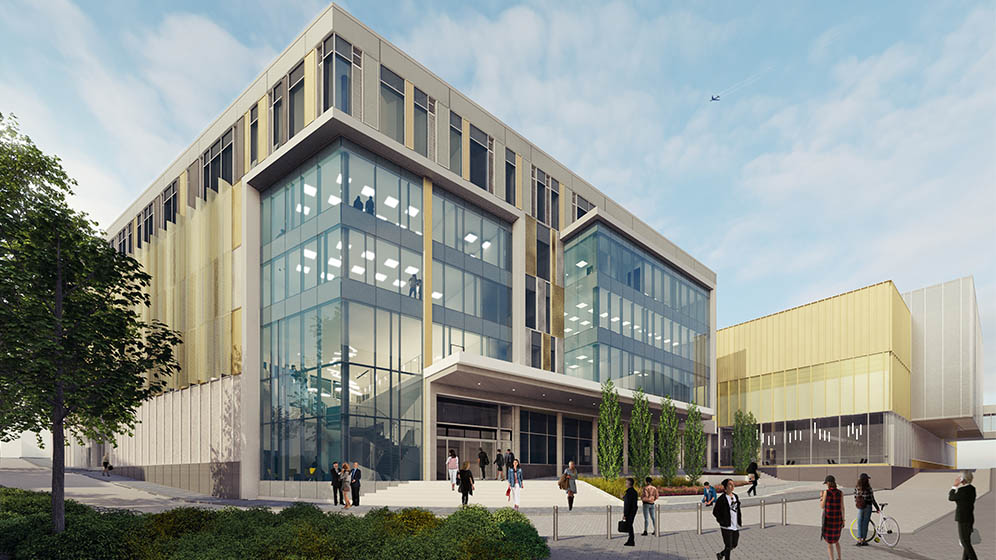
As a Cognitive Sciences student at Newcastle University, you'll be based in the School of Psychology's Dame Margaret Barbour Building. This is located on the University's city-centre campus.
The School of Psychology is around a ten minute walk from Newcastle city centre. It also has great access to libraries, the student union and sports centre facilities.
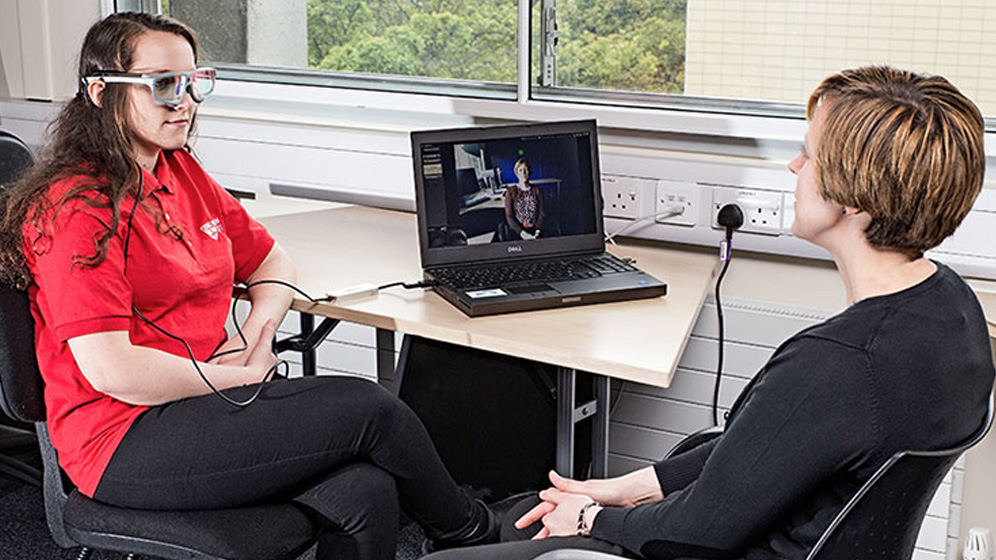
You'll also have access to our excellent practical facilities in the School, such as:
- a forensic interviewing suite
- a media and behaviour lab
- medical consultation rooms
- psychological testing cubicles
You'll also have access to the linguistics lab in the School of English Literature, Languages and Linguistics. The linguistics lab includes:
- a sociolinguistic interview suite
- a child language acquisition lab
- ultrasound tongue imaging
- state of the art recording equipment


Tuition fees and scholarships
Tuition fees for academic year 2027-2028
| Qualification: BSc Honours | |
|---|---|
|
Home students full time 3-4 years |
Tuition fees (Year 1)
£10,050 |
|
International students full time 3-4 years |
Tuition fees (Year 1)
31,950 |
Year abroad and additional costs
For programmes where you can spend a year on a work placement or studying abroad, you will receive a significant fee reduction for that year.
Some of our degrees involve additional costs which are not covered by your tuition fees.
Scholarships
Find out more about:
How to apply
Apply through UCAS
To apply for undergraduate study at Newcastle University, you must use the online application system managed by the Universities and Colleges Admissions Service (UCAS). All UK schools and colleges, and a small number of EU and international establishments, are registered with UCAS. You will need:
- the UCAS name and institution codes for Newcastle University (NEWC/N21)
- the UCAS code for the course you want to apply for
- the UCAS 'buzzword' for your school or college
If you are applying independently, or are applying from a school or college which is not registered to manage applications, you will still use the Apply system. You will not need a buzzword.
Apply through UCASInternational students can apply through an agent
International students often apply to us through an agent. Have a look at our recommended agents and get in touch with them.
Open days and events
UK open days
You'll have a number of opportunities to meet us throughout the year at our on-campus and virtual open days.
You'll be able to:
- explore our beautiful campus
- find out about our vibrant city
- discover what students think about studying at Newcastle
You'll also have the opportunity to speak to academic staff and find out more about the subjects you're interested in.
Find out about how you can visit Newcastle in person and virtually.
Worldwide events
We regularly travel overseas to meet with students interested in studying at Newcastle University. Visit our events calendar to find out when we're visiting your region.
Online events
Get in touch
By phone
Call us on +44 (0) 191 208 3333 and press option 1. Our opening hours are Monday to Friday 10am until 4pm.
Online
Keep updated
We regularly send email updates and extra information about the University.
Receive regular updates by emailChat to our students
You can email cognitivescience@newcastle.ac.uk