Music BA Honours
2027 entry information
- Study mode and duration
- Full time: 3 years
- UCAS code
- W300
- UCAS institution name and code
- NEWC / N21
- Tuition fees (Year 1)
-
FT Home: £10,050
FT International: £26,000 Scholarships available - Typical entry requirements
-
A-Level: BBB
IB: 32 points
View alternative offers - Course delivery
- On Campus
- Work placement opportunity Study abroad option
Your Future, Re-Designed
This course is currently undergoing an exciting transformation to embed richer encounters with industry, professional practice and society. As we redesign our curriculum to reflect emerging opportunities, future-facing themes and new ways of learning, some elements of this course may evolve to match the world you’re stepping into. While this transformation is underway, modules, learning experiences and assessment approaches may be updated. We’re committed to ensuring the quality, relevance and ambition of your learning journey, and we’ll keep you informed as soon as new information is ready.
Course overview
Study music at Newcastle and join a dynamic community of musicians and thinkers who are committed to valuing all music. Our community will help you embrace your individual creativity, expand your knowledge, and develop your critical thinking.
Study topics based on your interests such as performance, music history, analysis, audio production, composition and ethnomusicology. Many of our modules include vocation-oriented elements including music education and various work placement opportunities
You'll develop your performance skills through one-to-one tuition, group projects, and masterclasses with our specialist performance tutors who are leaders in their fields.
Hear from our graduates about their Newcastle experience
Quality and ranking
Professional accreditation and recognition
Professional accreditations are reviewed regularly by professional bodies to ensure they meet the latest industry practices and regulatory standards. This keeps your degree rigorous, relevant, and highly valued by employers, providing a clear pathway into your chosen career.
If you are studying an accredited degree and considering a career in Europe after graduation, it is important to stay informed about international standards. The best resource for current information is the UK Government's guidance on recognition of UK professional qualifications in EU member states.
This official resource provides essential details on:
- whether your profession is regulated in another country.
- the specific steps you need to take to practice abroad.
- which organisations you should contact to begin the process.
Our students


Luke from United Kingdom
Media, Communication and Cultural Studies BA
The lecturers and technical staff have been very kind and supportive.
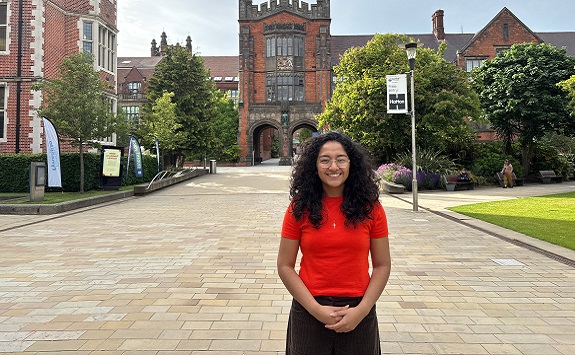

Isabella from Peru
Media, Communication and Cultural BA
I love how everyone in the community, both from the university and the city in general, is so welcoming, warm, enthusiastic and willing to help.
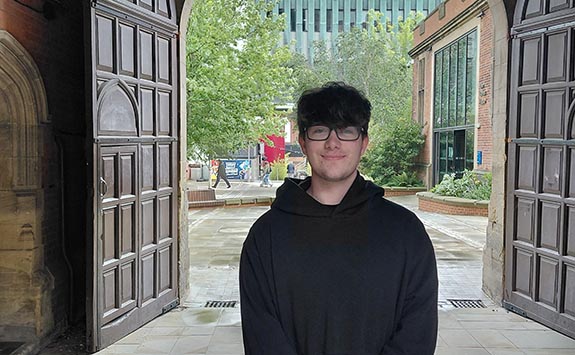
Christopher from United Kingdom
Journalism, Media and Culture BA
Newcastle University always stood out to me. It's beautiful with great architecture all around the campus.


Samantha from Ecuador
Media, Communication and Cultural Studies BA
Newcastle University has helped me realise my future by granting me the opportunity of putting myself in activities I wouldn’t normally do.
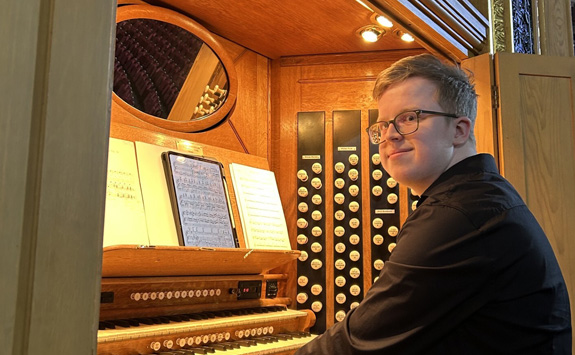
James from United Kingdom
Music BA
My degree combines all aspects of music including academic theory, performing and composing.

Eleanor from United Kingdom
Media, Communication and Cultural Studies BA
I've had the flexibility to not only write essays but create presentations in groups, make practical video and audio pieces too.

Jessica from United Kingdom
Contemporary and Popular Music BA
The degree has exposed me to so many different roles within the music industry and has allowed me to work out my passions through trial and error.
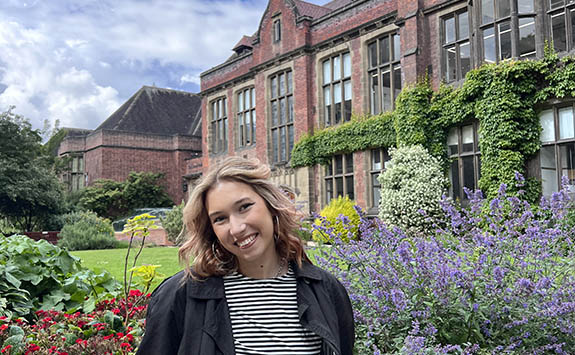
Isabel from United Kingdom
Film and Media BA
I really like the historical buildings around the campus and the strong sense of community atmosphere they create.

Emilia from United Kingdom
Fine Art BA
By studying Fine Art, especially with the focus on Art History, you're opening up many experiences that can lead you on to different specialties.
What you'll learn
Modules
The information below is intended to provide an example of what you will study.
Most degrees are divided into stages. Each stage lasts for one academic year, and you'll complete modules totalling 120 credits by the end of each stage.
Full details of the modules on offer will be published through the Programme Regulations and Specifications ahead of each academic year. This usually happens in May.
Our teaching is informed by research. Course content may change periodically to reflect developments in the discipline, the requirements of external bodies and partners, and student feedback.
You'll take the following compulsory modules:
| Compulsory modules | Credits |
|---|---|
| Understanding Music: Concepts, Skills and Methods | 20 |
| Challenges in Musicology: Music, People and Place | 20 |
| Audio Production Skills | 20 |
| Performance Studies 1 | 20 |
| Creative Projects | 20 |
| Musicianship | 20 |
Candidates may take modules, totalling 20 or 40 credits, in a foreign language. Please note that:
- This must be approved by the Degree Programme Director, who will also agree on an appropriate module or modules to drop from the Music degree provision to maintain the 120-credit total for the year.
- some modules at stage 2 have Musicianship, Audio Production Skills, or Creative Projects as prerequisites.
- opting out of Performance Studies 1 at this stage will disqualify you from taking Performance Studies at a later stage in the degree programme.
Choose from a range of historical, cultural and practical options, and have the freedom to determine the balance between these different strands. Module choices include historical and cultural options such as topics in Western music history, and practical options such as composition and performance.
Compulsory Modules
You take the following module:
| Compulsory modules | Credits |
|---|---|
| Music and Cultural Theory | 20 |
Optional Modules
You take at least one of the following Historical/Cultural modules:
| Optional modules | Credits |
|---|---|
| Themes in Musical Modernism | 20 |
| Popular Music and Media | 20 |
You take at least one of the following Applied or Practical modules:
| Optional modules | Credits |
|---|---|
| Composing for Spaces and Places | 20 |
| DJing Skills and Turntablism | 20 |
| Contemporary Musical Materials and Technologies | 20 |
| Songwriting | 20 |
| Translation for Singing | 20 |
| Performance Studies 2 | 20 |
| Creative Performance in Music, Film & Media | 20 |
| Orchestration | 20 |
| Folk Ensemble 2* | 20 |
* Students will need to take an audition if they wish to take Folk Ensemble 2
You'll conduct independent work in two specialities of your choice. For each of these you'll receive 1-to-1 supervision.
The specialities are categorised as a major specialist study and a minor specialist study in a second area.
You'll choose your other modules using the remainder of your module credit balance. These modules cover historical, cultural and practical material and are offered by our world-leading research-active staff in Music.
Modules
Compulsory modules
You must take one Major Specialist Study from this list:
| Compulsory modules | Credits |
|---|---|
| Major Specialist Study: Composition | 40 |
| Major Specialist Study: Dissertation | 40 |
| Major Specialist Study: Performance | 40 |
| Major Specialist Study: Project | 40 |
Optional modules
You may (but are not required to) choose a Minor Specialist Study module from the following list. This must be in a subject area that is substantially different to your major specialist study.
| Optional modules | Credits |
|---|---|
| Minor Specialist Study: Composition | 20 |
| Minor Specialist Study: Dissertation | 20 |
| Minor Specialist Study: Performance | 20 |
| Minor Specialist Study: Project | 20 |
You choose modules from the list below so that the total credits for the year adds up to 120:
| Optional modules | Credits |
|---|---|
| Case Studies in 21st Century Music | 20 |
| Richard Wagner, Wagnerism and the Musical Stage | 20 |
| Jazz Studies | 20 |
| Salsa, AfroBeat, Reggae and Rhythms of the World | 20 |
| Music, Gender and Sexuality | 20 |
| Folk Ensemble 3* | 20 |
*Students need to have passed Folk Ensemble 2 in Stage 2 in order to take Folk Ensemble 3.
You may, with the discretion of the Degree Programme Director, take one module from the list below, if not taken already at Stage 2, in place of a module selected in the list above.
| Optional modules | Credits |
|---|---|
| Themes in Musical Modernism | 20 |
| Composing for Spaces and Places | 20 |
| DJing Skills and Turntablism | 20 |
| Contemporary Musical Materials and Technologies | 20 |
| Songwriting | 20 |
| Translation for Singing | 20 |
| Popular Music and Media | 20 |
| Folk Ensemble 2 | 20 |
We base these figures and graphs on the most up-to-date information available to us. They are based on the modules chosen by our students in 2025-26.
Teaching time is made up of:
- scheduled learning and teaching activities. These are timetabled activities with a member of staff present.
- structured guided learning. These are activities developed by staff to support engagement with module learning. Students or groups of students undertake these activities without direct staff participation or supervision
How you'll learn
Teaching methods
To bring out the best in you, we use different forms of teaching for the range of approaches to music we cover.
Some modules are based around lectures and seminars, with reading or listening assignments. Other modules involve smaller specialised study groups.
Performance modules offer a combination of one-to-one tuition, group workshops and specialist masterclasses.
Assessment methods
You'll be assessed through a combination of:
-

Assignments – written or fieldwork
-

Coursework
-
Dissertation or research project
-

Essays
-

Examinations – practical or online
-

Group work
-

Interviews
-

Musical performance
-

Portfolio submission
-

Practical sessions
-

Presentations
-
Projects
-

Reflective report/journal
-

Reports
-

Seminar tasks/exercises
Skills and experience
Support
You'll have an academic adviser throughout your degree. They will provide academic and pastoral support.
Peer mentors will help you in your first year. They are fellow students who can help you settle in and answer any questions you have when starting university.
Opportunities
Study abroad
Experience life in another country by choosing to study abroad as part of your degree. You’ll be encouraged to embrace fun and challenging experiences, make connections with new communities and graduate as a globally aware professional, ready for your future.
You may choose to spend a year abroad as part of your degree in one of our partner institutions. You can do so in consultation with the Degree Programme Director. In order to qualify, you must have attained at least 60% in the first three semesters of study.
Find out more about study abroad
Work placement
Get career ready with a work placement and leave as a confident professional in your field. You can apply to spend 9 to 12 months working in any organisation in the world, and receive University support from our dedicated team to secure your dream placement. Work placements take place between stages 2 and 3.
You'll gain first-hand experience of working in the sector, putting your learning into practice and developing your professional expertise.
If you choose to take a work placement, it will extend your degree by a year. Work placement is not available if you're spending a year abroad. Placements are subject to availability.
You may be interested in
Entry requirements
All candidates are considered on an individual basis and we accept a broad range of qualifications.
The entrance requirements and offers below apply to 2027 entry.
We recognise that access to Music education and to Level 3 Music qualifications in the UK is unequal and in places limited but that musical talent and aspiration is not.
We therefore consider all candidates on an individual basis, and accept a broad range and combination of qualifications. This includes candidates who can demonstrate a high level of musical skill but that have not had the opportunity to study music formally as part of their Level 3 education or to take graded music exams.
| A-Level | |
|---|---|
| International Baccalaureate | |
|---|---|
Other UK and the Republic of Ireland qualifications
Alternative offers at Newcastle
Through one of our contextual or alternative offer routes, you could receive an offer of up to three grades lower than the typical requirements.
Contextual offers
We use certain contextual data from your UCAS form, alongside your application, to consider challenges that you may have faced in your education and the potential effect this may have had on your qualifications. This means you may be eligible to receive a lower contextual offer.
PARTNERS offers
One of the largest and longest support entry routes to university of its kind for students from underrepresented backgrounds. We support applicants from application through to study.
Realising Opportunities offers
A unique programme delivered in collaboration with 10 leading, research-intensive universities in the UK. The programme is open to students in Year 12/first year of college.
Pathways to Newcastle offers
Pathways to Newcastle, our national skills entry route, is available for specific subject areas.
High Performance Athletes
We support promising athletes at the application stage, who compete in regional, national or international levels in their sport.
Qualifications from outside the UK
English Language requirements
International Pathway and English Language courses
International Pathway courses are specialist programmes designed for international students who want to study in the UK. We provide a range of study options for international students in partnership with INTO.
These courses are specifically designed for international students who want to study in the UK and progress onto one of our undergraduate degrees. Our International Study Centre, has a range of study options including:
- International Foundation
- International Year One
- English Language courses
Find out more about International Pathway courses
Admissions policy
This policy applies to all undergraduate and postgraduate admissions at Newcastle University. It is intended to provide information about our admissions policies and procedures to applicants and potential applicants, to their advisors and family members, and to staff of the University.
University Admissions Policy and related policies and procedures
Credit transfer and Recognition of Prior Learning
Recognition of Prior Learning (RPL) can allow you to convert existing relevant university-level knowledge, skills and experience into credits towards a qualification. Find out more about the RPL policy which may apply to this course.
Interviews and auditions
We don't usually invite applicants to interview or audition. However, we might ask you to attend an online audition and/or interview if we are considering a contextual offer.
This is an opportunity for you to tell us about your music studies, particularly if you don't have any standard academic music qualifications.
Additional information
Interviews and auditions
We don't usually invite applicants to interview or audition. However, we might ask you to attend an online audition and/or interview if we are considering a contextual offer.
This is an opportunity for you to tell us about your music studies, particularly if you don't have any standard academic music qualifications.
Your future
Join our network of confident and successful graduates who benefit from our well-established ties with arts institutions in the city, in the wider region and beyond. These include:
- Royal Northern Sinfonia
- Samling Academy
- Opera North
Preparing you for career success
We work with a range of partners across the Music sector, providing you with professional development and networking opportunities.
We're the only North-East Music Academic Partner of UK Music, the collective voice of the UK’s world-leading music industry, which represents all sectors of the music industry to champion Music.
Through this partnership we provide a range of sector-leading opportunities, including:
- engaging with the industry
- providing research and networking opportunities
- a range of career development support
We also work closely with a broad range of regional cultural organisations, including strategic partnerships with the Glasshouse, so you can engage with the professional music sector and give back to the region in which you will be studying.
Find out more about the careers our graduates choose










Careers support
We'll help enhance your employability through access to career-related training, both as part of the course and through extra-curricular activities. Modules in teaching music help build skills needed for your future career.
We work with a range of arts, music and creative organisations and businesses including artist management and development, music production, community arts, festival and event management, and music therapy. These provide our students with guest lectures, masterclasses and placement opportunities. Examples include:
- Nordoff Robbins
- PRS for Music
- Generator
- Seven Stories
- Side by Side Arts
- Blank Studios
- Harambee Pasadia
Read more about careers with a Music degree
Our Careers Service is one of the largest and best in the country, and we have strong links with employers. We provide an extensive range of opportunities to all students through our ncl+ initiative.
Facilities and environment
Facilities
You'll be based in the School of Arts and Cultures, in the University's main campus.
Our department is based in the Armstrong Building, which overlooks the university's beautiful main quadrangle.
You'll have access to outstanding specialist music facilities, including state-of-the-art recording studios, rehearsal spaces, specialist tuition rooms, flexible study spaces, and the music skills suite.
The impressive King's Hall is used for orchestral and choral concerts, our professional lunchtime concert series, and student performance workshops.
Studios
Our professional recording and music production suites provide a space for:
- full band multi-track recording
- electro-acoustic composition multimedia work
- sound art installations
We have a range of portable recording equipment and tools designed for live electronics and technologically mediated live performance. These are accessible to all music students.
Rehearsal spaces
You'll have access to a range of rehearsal spaces, including:
- 25 acoustically treated practice rooms
- five instrumental teaching rooms
- a large, acoustically isolated, ensemble/band practice room
- two large performance/rehearsal spaces (each seats up to 50 people)
- the University's King's Hall (seats 400 people)
Read more about our Music facilities
Opportunities to perform
We offer a free professional concert series every Thursday lunchtime during term time, followed by a student performance where you have the chance to perform for, and listen to, your colleagues from all of our music degrees.
Newcastle University Symphony Orchestra rehearses weekly and usually gives 3 or 4 performances each year in the King's Hall and in the Great North Museum.
There is also a student-organised annual Summer Music Festival, showcasing our students' talents and giving you the chance to gain real-world experience of event management.
Our music students immerse themselves in Newcastle's thriving music scene which includes everything from high-profile venues like the O2 Academy and the City Hall, to more intimate local spots such as The Cluny, The Cumberland Arms and Bar Loco. It’s also home to the UK’s first co-operatively owned music venue, The Globe.
Watch some of our student performances
Sorry, you need JavaScript to view this video
Tuition fees and scholarships
Tuition fees for academic year 2027-2028
| Qualification: BA Honours | |
|---|---|
|
Home students full time 3 years |
Tuition fees (Year 1)
£10,050 |
|
International students full time 3 years |
Tuition fees (Year 1)
26,000 |
Year abroad and additional costs
For programmes where you can spend a year on a work placement or studying abroad, you will receive a significant fee reduction for that year.
Some of our degrees involve additional costs which are not covered by your tuition fees.
Scholarships
Find out more about:
How to apply
Apply through UCAS
To apply for undergraduate study at Newcastle University, you must use the online application system managed by the Universities and Colleges Admissions Service (UCAS). All UK schools and colleges, and a small number of EU and international establishments, are registered with UCAS. You will need:
- the UCAS name and institution codes for Newcastle University (NEWC/N21)
- the UCAS code for the course you want to apply for
- the UCAS 'buzzword' for your school or college
If you are applying independently, or are applying from a school or college which is not registered to manage applications, you will still use the Apply system. You will not need a buzzword.
Apply through UCASInternational students can apply through an agent
International students often apply to us through an agent. Have a look at our recommended agents and get in touch with them.
Open days and events
UK open days
You'll have a number of opportunities to meet us throughout the year at our on-campus and virtual open days.
You'll be able to:
- explore our beautiful campus
- find out about our vibrant city
- discover what students think about studying at Newcastle
You'll also have the opportunity to speak to academic staff and find out more about the subjects you're interested in.
Find out about how you can visit Newcastle in person and virtually.
Worldwide events
We regularly travel overseas to meet with students interested in studying at Newcastle University. Visit our events calendar to find out when we're visiting your region.
Online events
Get in touch
By phone
Call us on +44 (0) 191 208 3333 and press option 1. Our opening hours are Monday to Friday 10am until 4pm.
Online
Keep updated
We regularly send email updates and extra information about the University.
Receive regular updates by email